

Kindergarten: Learning to Learn
-
Kindergarten is designed to get your child excited about learning. These learning targets are the building blocks that will form your student’s ability to read, write and solve math problems:
Reading: Students will begin the year focused on identifying letters and sounds, and eventually move to reading stories with short three letter words.
Writing: Students will begin forming their letters and numbers. Its important to take the time to practice this now as these habits will set in quickly. By the end of the year, your student will be writing words and sentences.
Math: The curriculum focuses your student to work with numbers up to 20, counting, adding and subtracting. By year's end, students will get into shapes, measurement and how math works in the real world.
-
Help them develop a love of learning:
School may be one of the biggest shifts in your child’s life. Yes, its overwhelming, but its also very exciting. They will meet you people. They will learn new things. Your attitude about this is critical to their courage in the classroom!
They will be given tools to read all the vowel sound spellings, which will take practice. English is a quirky language!
Your student will be learning the letters and sounds and how to put them together to make words. The more you can practice this with them, the quicker they will pick up a book. You want them going to school confident!
While its fun to read them stories with pictures, as the year moves on, you can move into some short chapter books, like Magic Treehouse. Click here for a list of suggestions. It is important for them to create the “movie in their mind” as you read the words.
Math will be focused on counting forwards and backwards and their math facts up to 20. It takes lots of practice, and can provide for a great game in the car.
Here you will find parent resources for all the habits, lessons, projects, and social emotional learning cards in your set.
This includes:
prompts for you to say
examples of what your modeling
links to generate texts, problems and other resources you might need.
If you are looking for more support, please try our online courses or our personal learning audit.

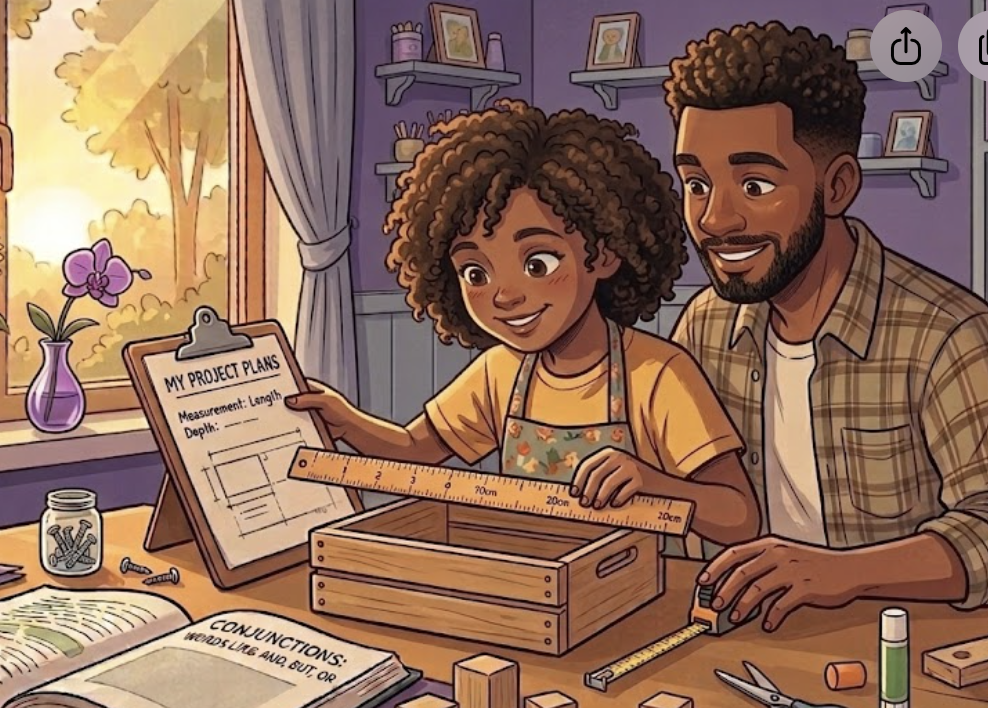
Let’s Do This Together
The Habits
StoryTime becomes a key habit to build as your child will be reflecting more deeply on their reading and the author’s craft.
You will be able to use CarTalk to practice mental math and build vocabulary.
In the long run, modeling word problems will give confidence to your child as they face many more to come in their educational career!




Math Habits
Select a learning target below. Prepare before you hand the companion card to your student and give it a try.
M1
Counting
I can count up to and from 100, including starting at any number, and skip counting by 5s and 10s.
CC.K.1 · CC.K.2
Prompt 1 — “How High Can We Count?”
• Guide your student to count to 100.
• Notice the patterns of how tens and ones change.
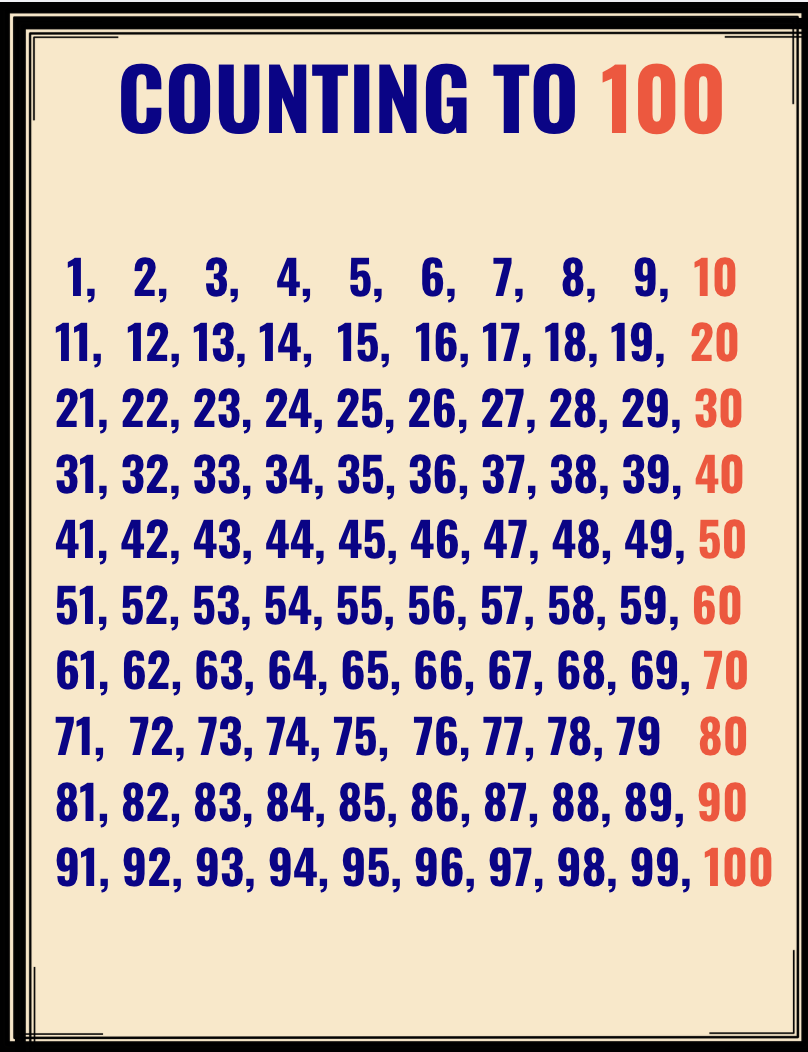
After 39 comes 40, you see the “ones” go back to 0 and the “tens” move up one.

Prompt 2 — “Let’s Try Counting Up From…”
• It’s important that they can start their count from any number:
“Let’s count up from 47”
• Take things slow as they will likely skip numbers at first
• Remind them of the patterns of how tens and ones change
• Next, try having them count backwards
“Now let’s count down from 63.”
• Play Tennis!
Prompt 3 — “Let’s Try to Skip Count by 10s”
• Introduce the idea of counting to really big numbers by 10s.
Instead of 1,2,3,4….10, you can count 10, 20, 30, 40…100
• When they master this, introduce the patterns of tens and ones counting by 5
5, 10, 15, 20, 25, 30… Do you see the pattern? What comes next?
• Play Tennis
 M2
M2
How Many?
I can count how many things there are all together and write equations.
CC.K.3 · CC.K.4
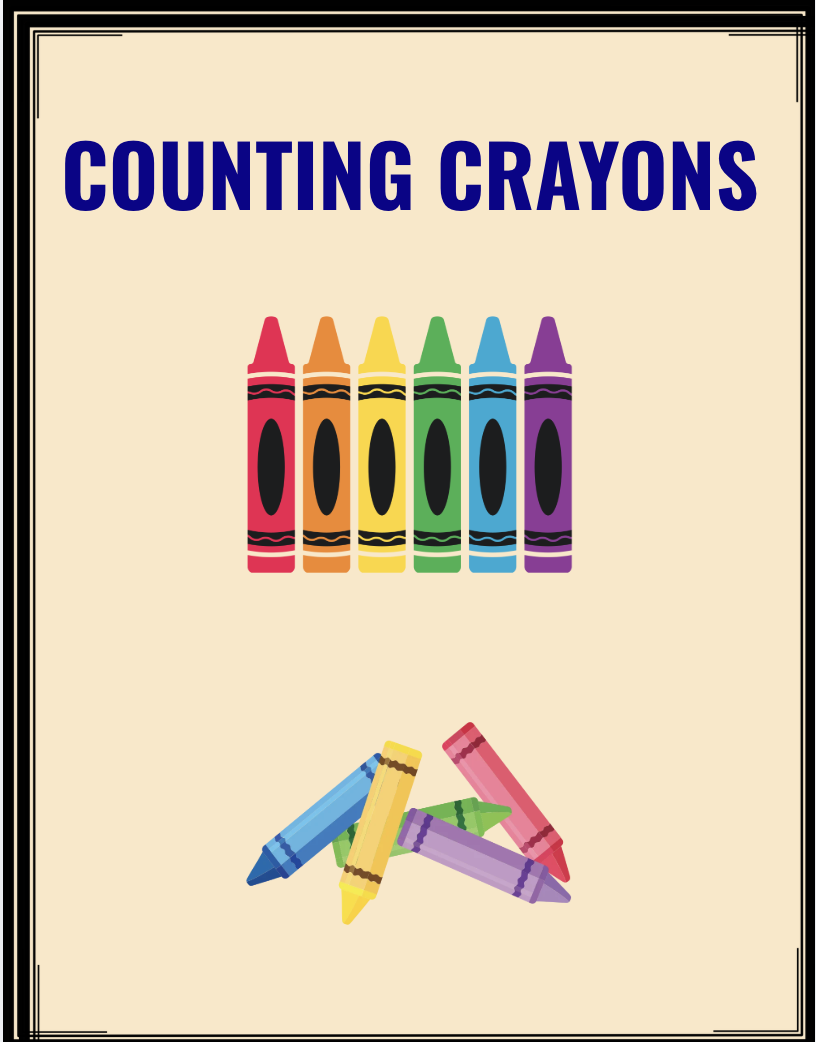
Skill 1 — How Many Crayons Do I Have?
I DO:
• Count a pile of 10 to 20 crayons, using tally marks.
Can you count the crayons with me and I will mark a tally for each one?
It’s important we count slowly so we don’t miss one.
• Write the total number on the page in the notebook next to the tally marks.
We Do:
• Watch as they count, and make sure they are not skipping numbers. One crayon is one tally.
• Watch that they write all their numbers correctly.
Skill 2 — How Many MORE Crayons Do I Have?
I Do:
• After counting a pile of crayons, add a second pile this time.
Let’s see how many more crayons we have now.
• Count the new pile, with tallies and then a number.
We added 4 more crayons to our collection of 6.
As a mathematician, we can write this as:
6+4=
• Count the total of both piles together
So all together we have 10 crayons.
6+4=10
10 is 4 more than 6
We Do:
• Try more with two piles and watch as they write their equation. Listen to how they read it back to you.
• Make sure they understand the meaning of the + and = signs
• Continue this practice throughout the year until this is completely mastered using the notebook.
• Make a group of dots, circle some of them.

• Count inside circle + outside circle = total
CHALLENGE
• Try modeling subtraction by counting a bigger pile and then pulling some out to form a 2nd pile.
• Count the pile left over and model writing equations like:
10-6=4.
M3
Mental Math
I can add and subtract numbers up to 20 using my fingers.
OA.K.1
Skill — Counting with Fingers
I Do:
• At a stoplight, model using your fingers to add, for example,

4+5
• Holding up 5 fingers and say "4."
• Then, using two fingers, count up "5, 6, 7, 8, 9".
• Repeat 4+5=9.
We do:
• Give them more problems that add to under 10.
• Watch that they are using their fingers to count the NEXT number and not repeating the number they first said.
• Once you see them mastering this you can try counting backwards for subtraction.
9-6=3
Say "9" and hold six fingers
Count backwards on your fingers "8,7,6,5,4,3"
Challenge:
• The kindergarten standard asks them to add and subtract numbers up to 20.
• Try some larger numbers and see if they can count from a higher number in their head and hands.
11+7=
Say 11 and hold up 7 fingers. It's 18!
M4
Breaking Numbers Apart
I know how to break numbers into two parts in different ways.
OA.K.3 · NBT.K.1
Prompt 1 — What Are Different Ways You Can Add Two Numbers to Make 10?
• It’s important to see how numbers can be made from others.
• Start by finding all the ways to break apart the number 10.
How about 6+4, can you think of another one?
7+3, 8+2, 9+1, 5+5
• If you want they can use their fingers to see all the different ways.
Prompt 2 — What Are All the Ways I Can Make 8?

• Choose a new number to break apart.
• Play tennis to see if you can come up with all the ways
7+1, 6+2....
Prompt 3 — It’s Easy to Break a Number into 10s and Ones. Can You Break 13?
• Choose numbers in the teens and twenties to break apart.
• Play tennis
10+3
18 is 10+8.
25 is 20+5
M5
Using an Array
I know how to use dots in rows and columns to help me count, add and subtract larger numbers.
OA.K.2 · NBT.K.1
Skill 1 — Ten Frames and Laying Out Larger Numbers
I Do:

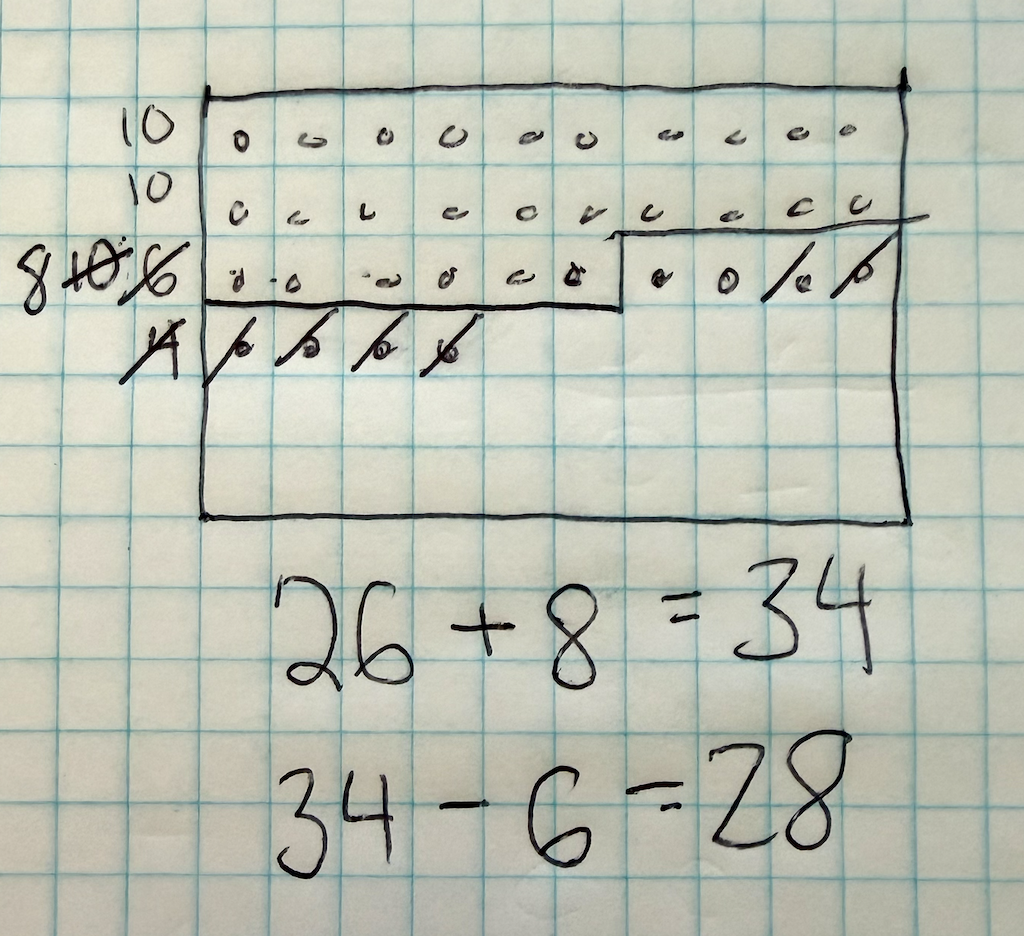
• Using your graph paper notebook, draw a box 10 squares across and 3 squares down.
• Model writing dots for the number 26 by quickly putting dots in all 10 squares of the first two rows and then counting as you do the 6 ones on the 3rd row.

We Do:
• Make some more “10 frame” boxes with them and try more numbers between 20 and 50.
• Watch as they begin to master adding the 10s rows and identify when they get to the ones.
Skill 2 — Adding and Subtracting Using an Array
I Do:
• After creating an array for a number like 26, write an addition equation like 26+8.

• Show how you can add 8 dots, completing one of the 10s and continuing to the next row to 34.
• Using a previous 10 frame number, model a subtraction equation like 34-6.
• Show how you can cross out 6 dots and moving up to the previous row.
• Count the remaining dots to find 28.
We Do:
• Watch that they keep track of the amount of 10s and ones as they count backwards and forwards.
• This may take some time to master, so keep watching until they are finding the correct answer 3 times in a row.
You Do:
• Keep this card handy throughout the year, as this is a critical skill in 1st, 2nd and 3rd grade math!
M6
Finding Shapes in the World
I know what is the difference between shapes and can find them in the real world.
G.K.1 · G.K.2, K.4 and K.5 · G.K.6 and K.7
Prompt 1 — “What Makes a Triangle?”

• Discuss the number of sides and corners.
• Discuss the differences between this and a square and a rectangle. They have the same number of corners and sides but the lengths of a square are equal.
• If interested, continue discussing other shapes based on their corners and sides.
Prompt 2 — “What Is the Difference Between 2 and 3 Dimensions?”
• Point out the difference between the sphere and circle (on back of card)
• One is flat and one can roll like a ball. Most shapes we find are actually in 3 dimensions.
• Discuss the images of cubes and rectangular prisms and how their differences are still based on the same side lengths as a square and rectangle.

• If interested, continue discussing other 3-D shapes like cones, cylinders, prisms, etc.
Prompt 3 — “What Shapes Can We Find?”
• As they are looking out the backseat window, ask them to find shapes in the real world and call them out.
• Move into finding combinations of shapes. (example the front of house might be a triangle on top of a rectangle.) (more examples on old card backs)
• If interested, create a game where you earn points for finding certain shapes.
Language Habits
Select a learning target below. Prepare before you hand the companion card to your student and give it a try.
L1
Letters and Sounds
I know how to write all my letters and what sounds they make.
RF.K.1b · RF.K.3a · L.K.1a · RF.K.3b
Skill — Letters and Sounds
The first step in reading is being able to identify and write the letters. You say the letter and they write both the capital and little versions.
Next move into saying sounds and having them write the letter.
• Start with consonants. Begin by saying short, clear consonants sounds.
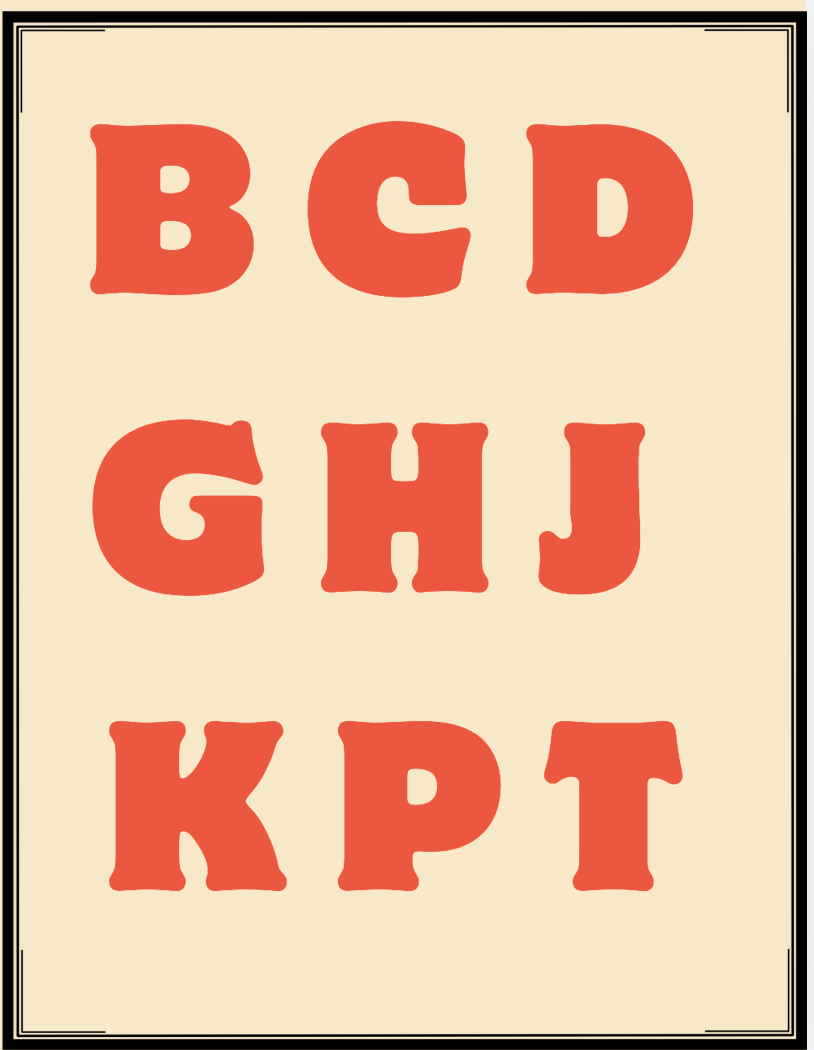
• Continue with longer, subtle consonants.

• Emphasize the differences between:

• Move into short vowel sounds. Listen carefully to the difference between

L2
Sight Words
I know how to spell some of the special words that don’t follow the rules.
RF.K.3b
Skill — Sight Words
• Discuss how “sight words” don’t follow the letter and sound rules.
You will need to memorize these words, but they will help you to move into writing full sentences.
• Introduce two words a week over time during Listen and Write sessions
• Spiral back to practice previous ones throughout the year

• If you think of more or you spot one while reading and add to this rotation.
• You can also find a long list of sight words if you click here.
L3
Rhyming
I know how find rhyming words using either long or short vowel sounds
RF.K.2a · RF.K.3b
Prompt 1 — “What Makes Words Rhyme?”
• The ending must sound the same. This includes both a vowel and consonant sounds.
• Try to give them a word or two and see if they can find a word that rhymes.

Prompt 2 — Long Vowels Say Their Name
Long A says A, Long E says E
Sky, my, try Rhyme with a Long I.
Gate, Mate, Skate rhyme with long A
What rhymes with Long E?
• Play Tennis to create lists of words that rhyme together and decide if the vowel sound is long or short.
L4
Syllables
I know how to break longer words into its syllable parts.
RF.K.2b
Prompt 1 — Breaking Words into Beats
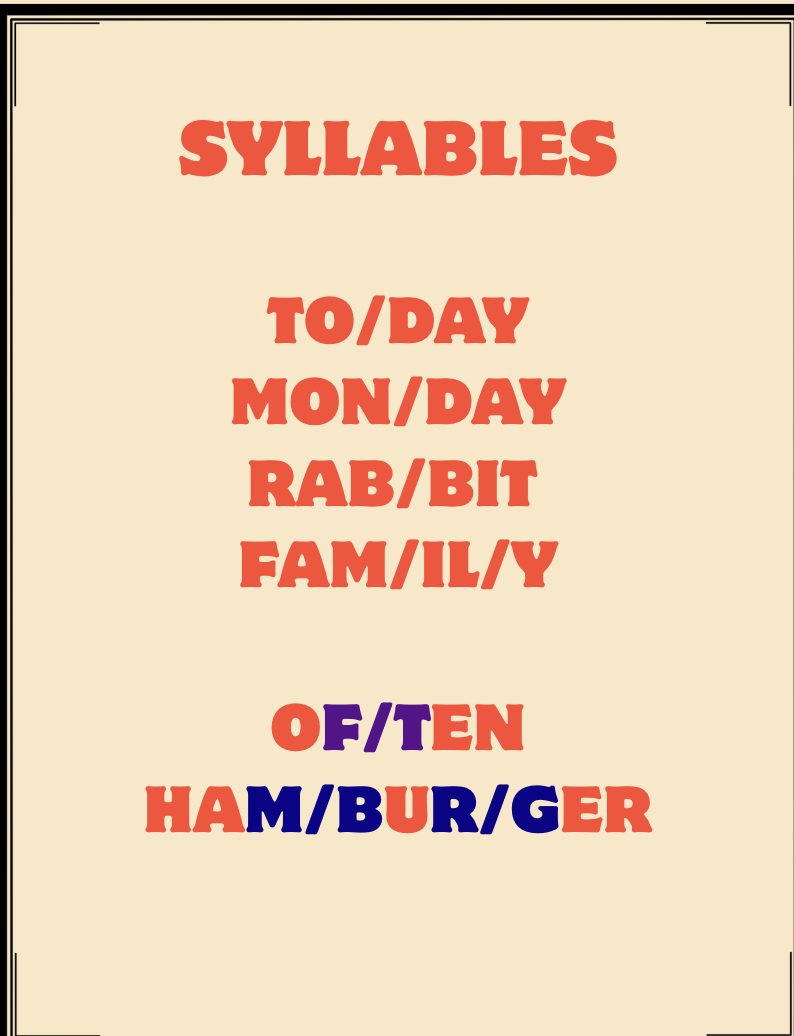
Syllables are how we break up longer words into beats.
You can clap to count how many syllables are in each word.
O / PEN
There is two syllables.
• How many syllables are in:
Prompt 2 — Where the Word Breaks
Listen carefully where the word breaks into two syllables.
Between what two sounds are these words broken up.
• of/ten
• Ham/bur/ger
• chil/dren.
Prompt 3 — Spelling Longer Words by Syllable
Try to spell a longer word by spelling each of its syllables.
It’s ok to make mistakes as long as you catch every sound.
Can you spell helpful?
November
Computer
agreement
• Play Tennis!
L5
Blending Words from Sounds
I can blend letter sounds together to spell words.
RF.K.2c · RF.K.2d · L.K.2c
Skill 1 — CVC (Consonant, Vowel, Consonant) Words
Reading gets exciting once your student can blend the sounds into words.
I DO:

• Use the example of BUS to model how to count out the three sounds you hear with your fingers
B, U, S.
• Then write the letters as you say again B, U, S.
We Do:
• Try another word like:
BIG
• Prompt with:
What's the first sound you hear?
What's the middle vowel sound?
What's the last sound?
Skill 2 — Vowel Switching
• Vowel sounds are subtle, but so important to reading.
• Spend time practicing series of Listen and Write words that use different vowels like:
PIN, PEN, PAN
SIT, SET, SAT
Skill 3 — Words with 4 Sounds (CCVC or CVCC) Like LAST and TRIM
• Introduce words that have st, tr, mp and other “consonant blends” like:
Last Trim Stop Trust
• Watch for them omitting or missing the sequence of sounds
• Try vowel swaps with this new pattern.
STICK, STACK, STOCK
L6
Author’s Purpose
I understand how authors write books and why they do.
RL.K.6 and RL.K.7 · RF.K.1a · RL.K.5
Skill — Discussing the Author’s Choices
In Kindergarten, developing a Reading Time Routine is critical. It doesn’t matter if it's Saturday morning or every night.
It's important to share the responsibilities of reading and gradually fade towards your Kinder student reading more often than you.
• Put your finger on each word as you read a story to them, making sure they see how to read from right to left and parts of a book.
• As you read, stop and think aloud about the story, the author and the illustrations.
It's important to choose a variety of different types of texts, not just fictional stories, and discuss "author's purpose." Here are some prompts you can use while you are reading:
Why did the author write this book?
Was it meant to be funny, sad, does it have a twist?
Is it trying to teach me something?
Is it trying to make me change my mind about something?
How does the illustrator and author work together?
• After some time reading a variety of books discuss which type of reading they like best and why.
• Go Socratic !
• All these discussions will one day make them better writers!
L7
Comprehension
I understand what's happening when I read a story.
RL.K.2 and RL.K.3 · L.K.1b · RL.K.4
Skill 1 — Retell
Comprehension is the top of the reading mountain that you are climbing towards.
As you are building the letters and sounds, you must also build the place in their mind that listens to these words as they go by.
Take an opportunity to start a chapter book at some point in the year during StoryTime. There are some great book ideas if you click here.
• One of the best tricks to building comprehension is for their mind to build the "Movie" inside.
• As they are learning to read, it is important you read to them and model at the end of each short story or chapter how to reflect and "retell" the story back in your own words.
Wow that was a great [chapter/scene]! The movie in my mind has the monster swinging from the tree branches.
What's your movie look like?
• Using the notebook, have them draw pictures to create a comic strip of the chapter book as you discuss this.
• As the year progresses, they can add sentences to summarize these as well.
• By the end of the story, they will have created a beautiful memory of the book for your family to cherish.
• Check out these exemplars!

Skill 2 — Clarifying While Reading

• Children hear more than 20,000 new words in a year but only understand about 2,500 words on average by kindergarten. This presents a lot of guessing on the meaning of conversations.
• When they are reading, you will notice them stumble on a word. This is your signal to help them to clarify and realize when to stop reading and ask for help.
Mmm. What do you think [strange new word] means?
Challenge:
• Create a dictionary section in your notebook and write all the new words they learn with picture definitions. Here are some exemplars:
Skill 3 — Deeper Meanings
• Discuss the characters, settings, and identify the problem and a solution in the story.
• As you get deeper in this conversation, look to identify a lesson or purpose for writing the story.
I think that [character struggle] is a lesson for kids so they remember to [moral].
• You can practice these in discussions on movies too!
• Go Socratic !
L8
Ask and Answer Questions
I can ask and answer good questions about a story or text.
RL.K.10 · RL.K.1 · RI.K.2
Skill 1 — Questions That Find the Answer
As part of the Reading routine, take an opportunity to start a chapter book. There are some great book ideas here.
• Model asking a question and finding the answer in the story.
What did Mr. Dursley say when the letters started coming in the fireplace?
• Point to the exact line.
He said, "No Post on Sundays!" on page 34.
• Practice with Who, What and Where questions that are easier to answer
• Let them ask you a question and you show them how you find the answer in the book.
• Play Tennis

Skill 2 — Questions That Develop an Opinion
• Model and think aloud how to answer How and Why questions such as:
How did [the character] feel after [the event] happened?
How did they [solve the problem] in the story?
Why do you think [they] did [that]?
• Using CarTalk , you can focus on discussing one good why or how question.
• Go Socratic !
• After they finish a chapter book, they can develop a quiz in their notebook.
• Have them craft questions that go from easy (skill 1) to hard (skill 2)
• Model how to use a Google Form, Kahoot or other platform to make the quiz and score it.
L9
Making Connections
I can see how the characters or events in the story are like things I have seen.
RI.K.3
Skill 1 — Spotting Similar Situations
As part of the Reading routine, take an opportunity to start a chapter book. There are some great book ideas here.
• While reading, spot something a character does, says or feels that you can connect to something in your own life or something you have seen before.
"Does this remind you of when we ….?"
Skill 2 — Hypothetical Situations
• Making connections lets you tap into prior knowledge of the experience and get deeper into the story or predict an outcome.
• Ask something like:
"If you were around this character, what would you say to him?"
"How do you think she is feeling after she realized this?"
• Go Socratic !
L10
Vocabulary
I have strategies to learn new word meanings.
L.K.3b · L.K.4a · L.K.4b · L.K.3a
Skill 1 — Shades of Meaning
While in the car, there are multiple strategies you can use to build strategies to uncover new vocabulary.

• Model how to identify and describe nuances in word meanings.
Frigid, cold, icy, cool
• Create word lists that exhaust categories of things, ideas, adjectives, actions.
shapes, food, tools, animals, vehicles, flowers, insects, movies, colors, clothes, dinosaurs
Skill 2 — Prefix-Suffix
• Create a list of frequently occurring prefixes and suffixes.

• Choose a root word to play with.
write, care, fair, hope, shoe
• Discuss how the meaning of a root word can change when certain prefixes:
• re- reread (read again)
• Hope- ful (full of hope)
• Not all of these will work together. It's important to identify these as "nonsense" words.
Skill 3 — Opposites
• Discuss opposites and how they help you explore new words.
• Create a list of pairs:
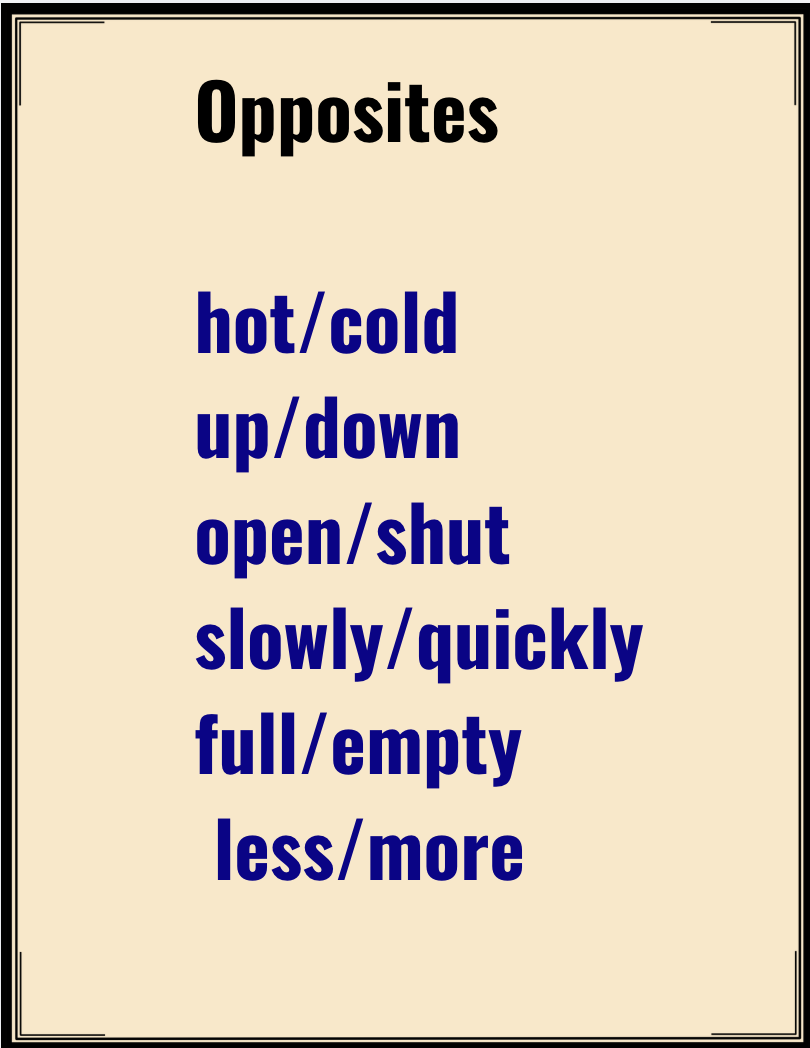
• Find words they don't know yet and try to use the opposites to give them a clue
Humble/Arrogant
Kind/Malevolent
Scarce/ Abundant
• Play Tennis!
Skill 4 — Multiple Meaning Words

• Discuss how some words have multiple meanings and when you see them you will need to determine the appropriate meaning.
• Generate a list of words like duck, fly, wave, dress, bat, watch.
• Use them in sentences to provide clues to their different meaning. Have your child describe the difference in these ducks.
I had to duck under the bridge.
The duck was quacking.
• Have them try to give you two sentences using a word in two ways.
• Play tennis!
L11
Sentences
I can write full sentences with correct capitalization, punctuation and syntax.
L.K.1d · L.K.2a · L.K.2b
Skill 1 — Capitalization

• Remind them to capitalize the first letter:
• in a sentence,
• In proper nouns like names of people, places, products
• in days and months
• Write a sentence incorrectly for them and ask them to find the mistakes
my doG is BroWn and His name is bingo.
• Say sentences that include proper nouns, days and months like:
Josh has to go to the doctor on Monday.
My birthday is in May.
Skill 2 — Punctuation
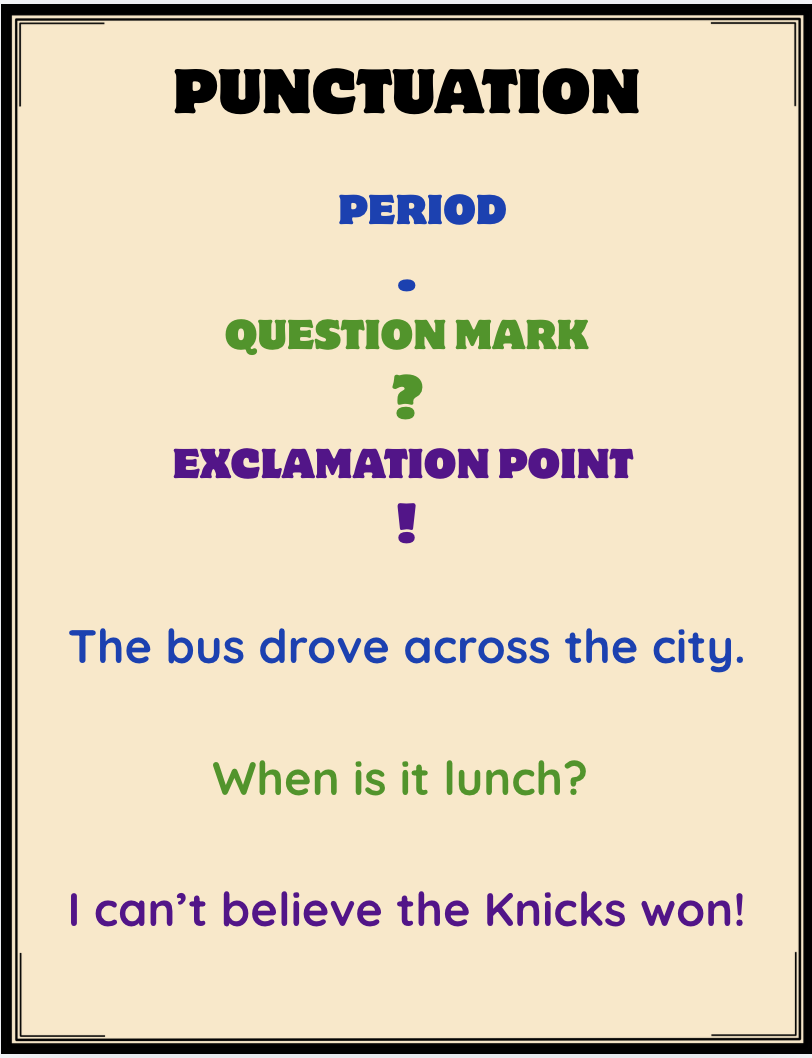
• Remind them of the rules of punctuation.
• Period : (.) completes regular statements
• Question mark: (?) completes questions
• Exclamation: (!) completes expression of surprise
• Use sentences that require these in different ways for Listen and Write
When is dinner?
You did a great job!
• Remind them that punctuation only comes after a complete sentence, which has subject (who) and a verb (an action). See if they can point out how these examples are not sentences:
went to the store (NOT A SENTENCE)
I write poems I write one every day.
Skill 3 — Prepositions
• Prepositions are the words that will allow your child to connect ideas in complete and clear sentences.
• Generate a list of them
to from in out by on of with off for
• Say a preposition and have your student say it in a sentence.
• Have them try to write the sentence they created.
Projects
Each project breaks into lettered cards (A, B, C...) instead of numbered skills — open a project, then work through its cards in order.
P1
Comparing Measurements
Measure and compare objects (<,>,=) using measurement tools like paperclips.
MD K.1 · MD K.2 · CCK.K.5 · L.K.6
Card A — Measuring Items
• Find objects around the house to measure using paperclips or another small repeated item.
I DO
• Model measuring using this smaller item. For example:
A serving spoon with paperclips
A coffee table with Uno cards
We DO
• Allow them to measure other items with small units of their choice.
• Make sure to line everything up carefully.
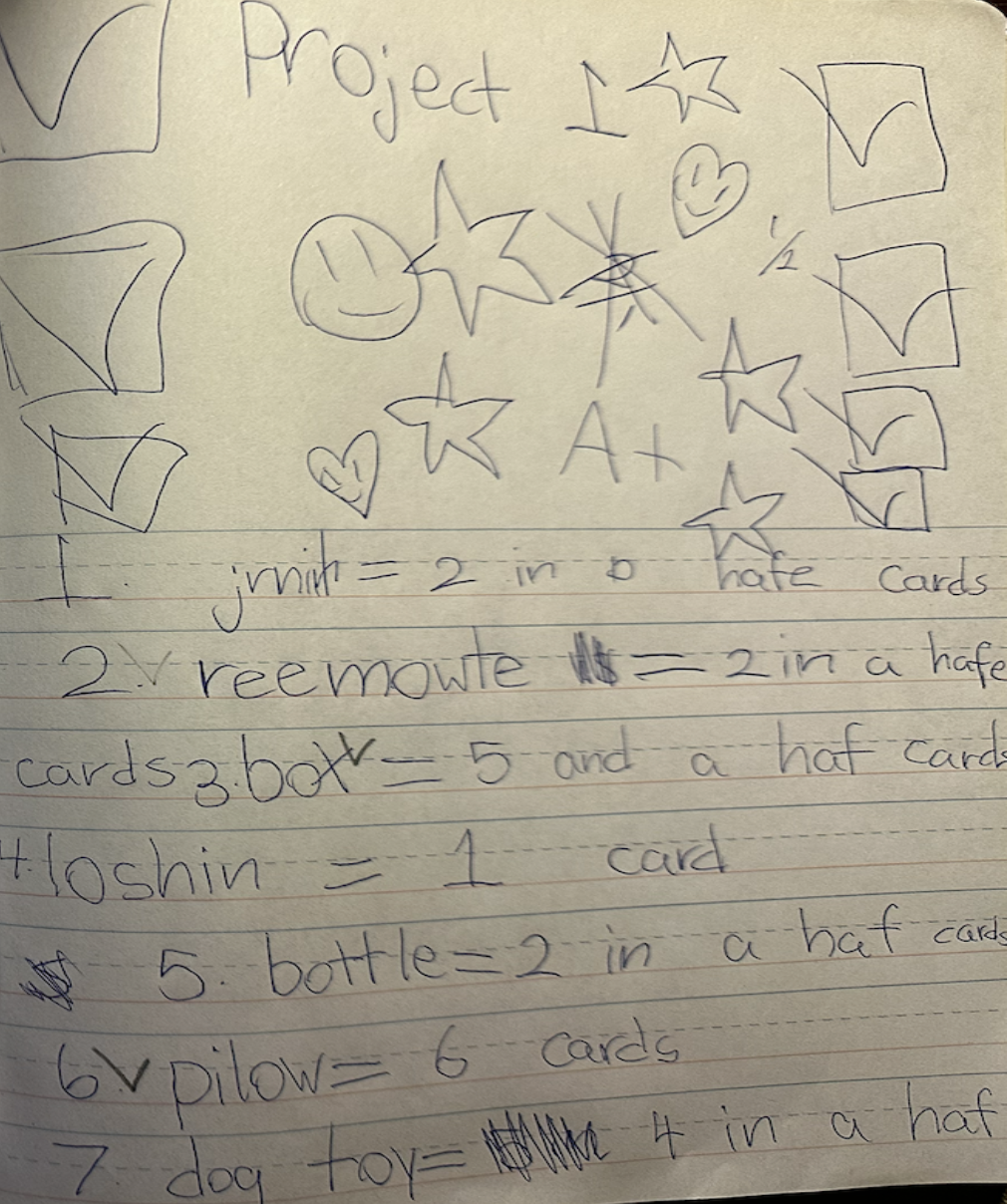
• Complete measurements for 10 household objects.
• Record answers in a notebook. For example:
Spoon = 5 paperclips
Book = 2 cards
Beading kit box = 23 Legos
• Ask them to estimate when an object is "about half" of another paperclip longer and adjust measurements like Spoon = 5 ½ paperclips
• If measurement skills are developing well, you may also model using a ruler, but rulers are not required in kindergarten.
Card B — Comparing Measurements (Modeling)
• Use the measurement chart from Card A to compare objects.
I DO
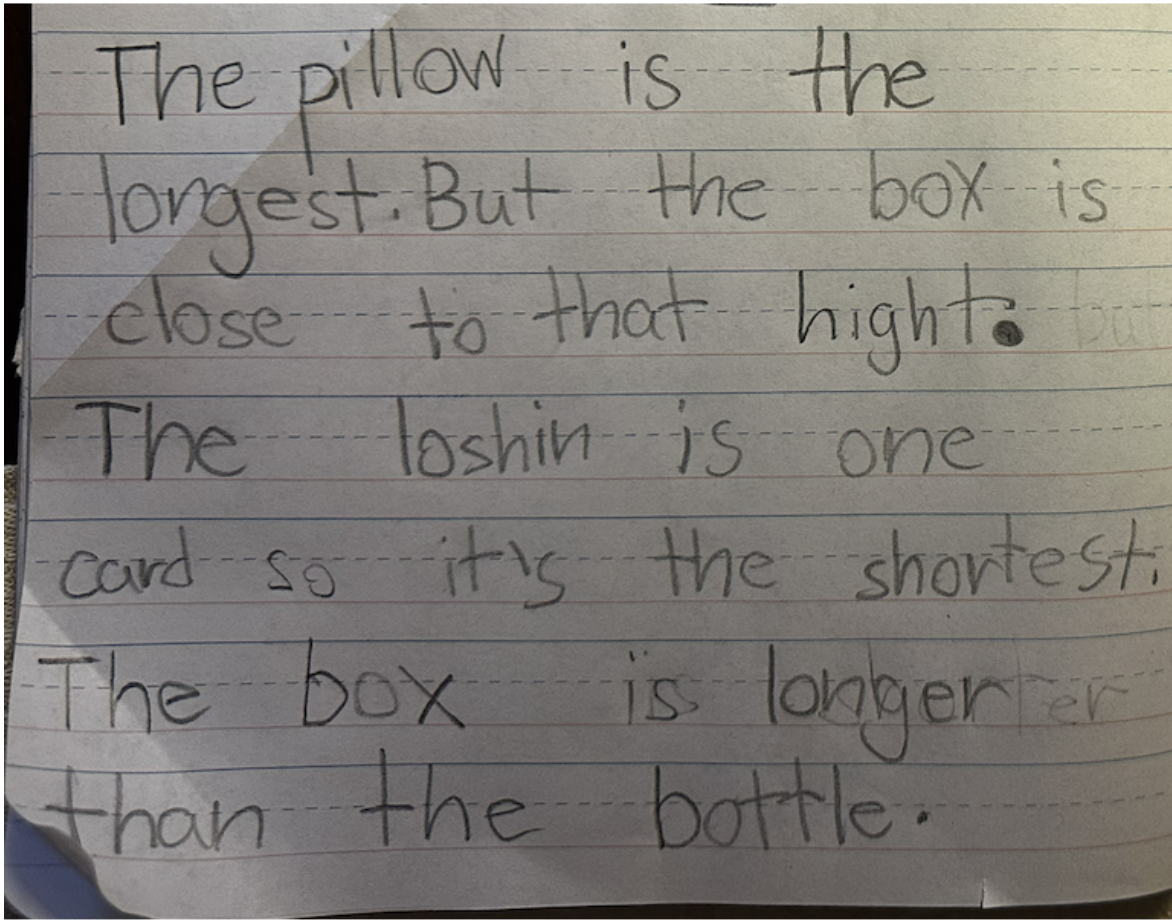
• Model comparison sentences such as:
"The pencil is longer than the spoon."
"The spoon is shorter than the pencil."
We Do
• Ask them to try. "The toy car is shorter than the book." "The book is longer than the toy car."
• Once comfortable, introduce the idea of using units.
The toy car is 3 paper clips longer than the eraser.
• Encourage your child to write comparison sentences independently without worrying about spelling.
• Challenge them with new ways of comparing items:
• heavier/heaviest
• Lighter/lightest
• Harder/hardest
• softer/softest
Card C — Comparing Numbers with Symbols (Modeling)
I DO
• Use the small unit measurements recorded from Card A to compare numbers with < > and =
• Remember the "alligator" always eats the bigger number
• Model an example:
8 paperclips > 5 paperclips so the book is longer than the pencil.
We DO
• Using the notebook have them write the inequality and a written sentence description.
• As they become more comfortable, measure longer items and compare any two numbers up to 20 with these symbols.
"The desk measured 25 paperclips and the table measured 18 paperclips. What can we write?
25 > 18 The table is shorter than the desk.
• Ready for a challenge?
• Have your child guess the length of a larger object in paper clips
• Then measure it, and compare results in your notebook.
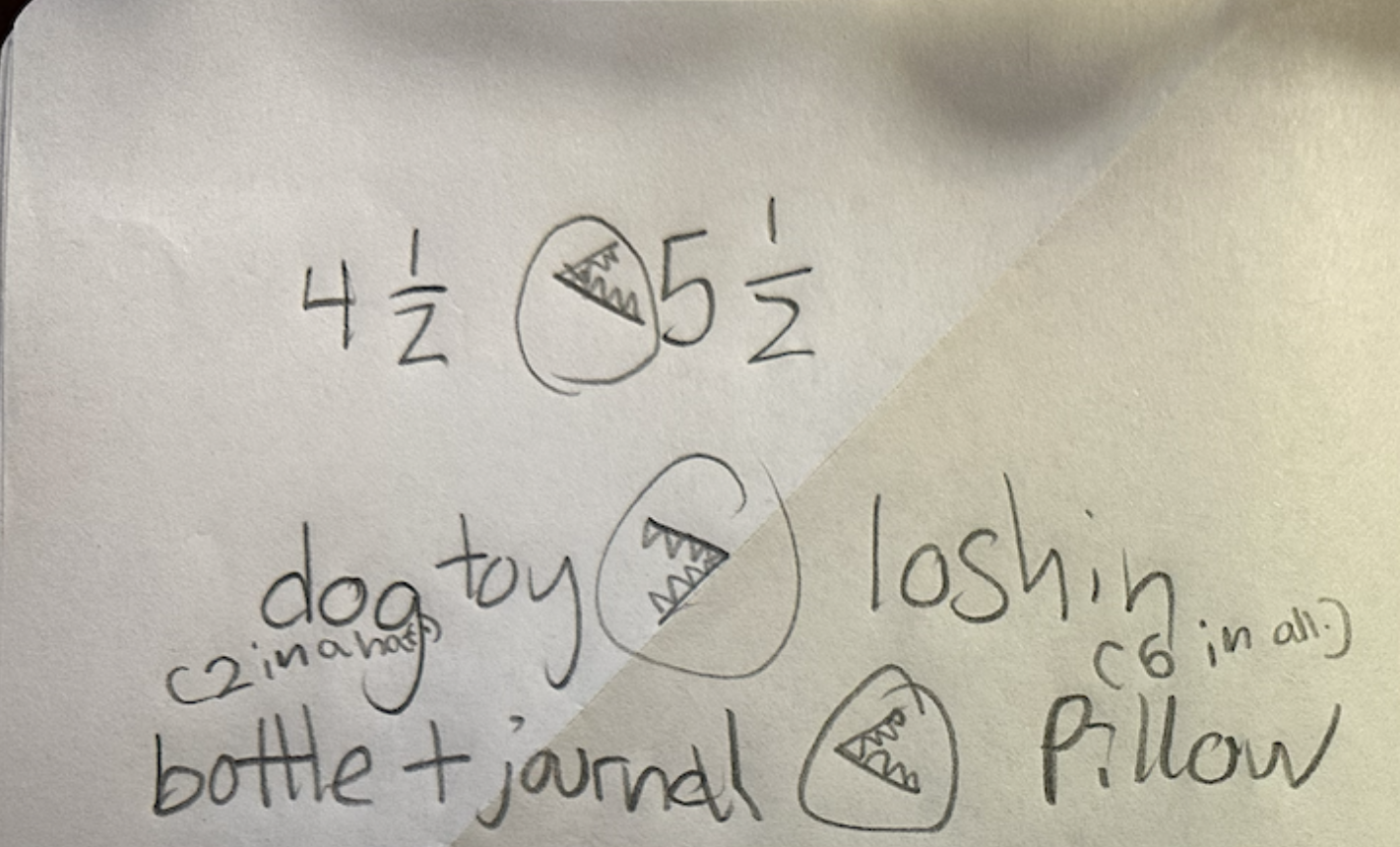
Was your estimate >, <, or = to the actual?
Bottle > dog toy
Bottle + pen is (< or >) than the pillow
P2
Small Moment Writing
Write about a real memory using sequencing and details.
WK.1 · WK.3 · WK.4 · WK.5 · WK.6 · WK.7
Card A — Brainstorming Ideas
Prompt 1: What is a moment in your life that you remember really, really well? Why?
• These small moments can make you feel things years later.
• Guide them to decide if they want to write about a scary, fun or even embarrassing moment.
• Go through different memories and guide them to choose one to write about.
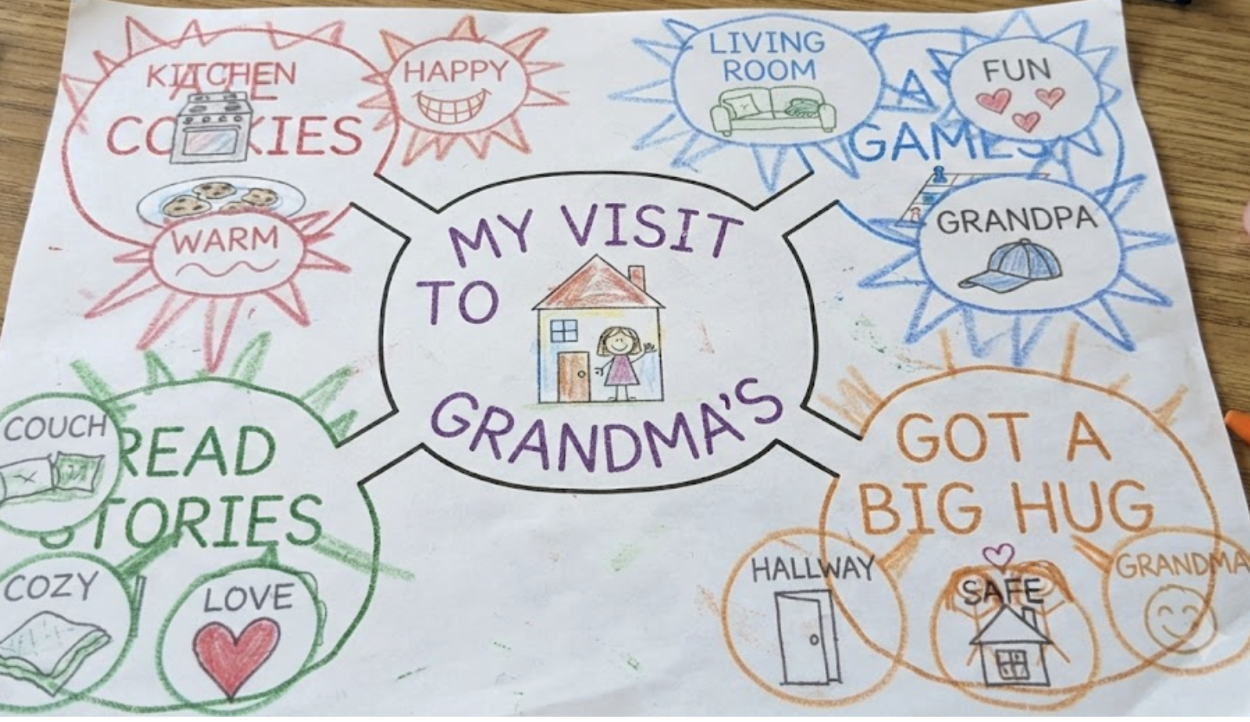
Prompt 2: What are things you notice on how they organized their ideas on this Brainstorm Web
Point out how the smaller spokes for each memory to include more details:
• People
• Activities
• Feelings
Notebook Follow Up:
WE DO
• Guide your student to make a brainstorm web for their memory.
• Include 2-3 large bubbles of events within this memory
• Include 1-2 bubbles of people and feelings for each large bubble
• HINT: You might need to I DO your own moment and brainstorm all these bubbles completely at home.
Card B — Sequencing & Drafting
After choosing a memory, help your child organize and outline the moment.
• where they were
• who they were with
• what happened in sequence
• Include feeling sentences.
Model your own example first, then guide them through theirs.
Aim for 5–10 sentences
Example:
My Trip to the beach
1. I was excited to go to the beach.
2. My brother and I got dressed.
3. Dad drove us to the beach.
4. The sand was hot.
5. We swam in the ocean and the water felt cold.
6. I was tired on the drive home.
7. We ate pizza for dinner.
8. I want to go back soon.
Card C — Revising & Publishing
I DO
Using your example, model rereading writing slowly to check for mistakes.
Model how writers:
• Reread
• fix missing, extra, or mistaken words
• check if sentences make sense
WE DO
• Guide your child as they review their own writing by asking them if they notice things.
• If they feel ready, ask them to replace words.
Instead of using "good" and "nice" with I like to write with more descriptive words like "excited" and "caring."
• When you are ready have them:
• rewrite their final copy
• draw a picture or a comic of pictures to match their story
• Celebrate their finished "published" work.
P3
My Favorite Topic Research
Research and explain information about a favorite topic.
LK.1c · RIK.2 · WK.2 · RIK8
Card A — Choosing a Topic
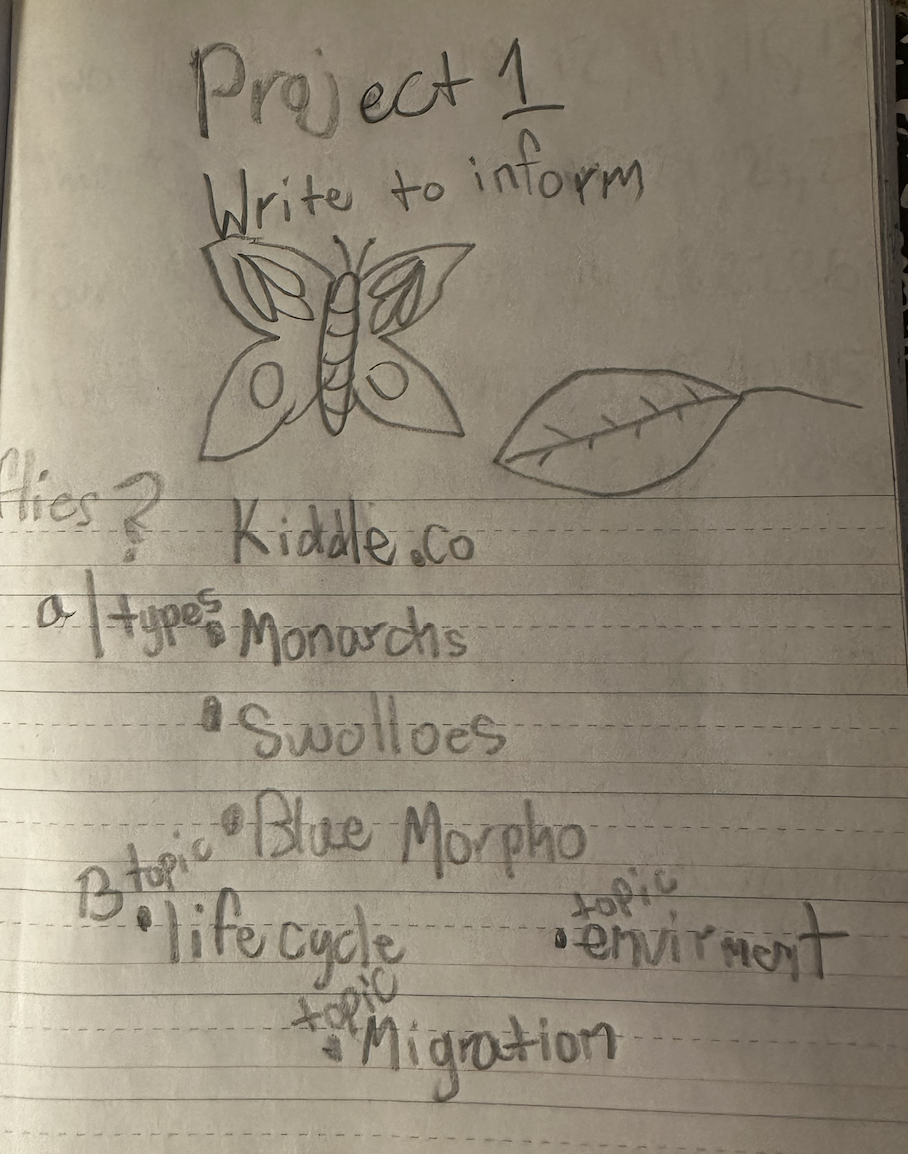
Discuss possible research topics and why they would be interesting to learn more about. Start with a categories and with the goal to discuss further until they get more specific:
Animals —> emperor penguins
sports teams —> los angeles dodgers
Countries —> Argentina
Practice asking and answering options within the topic using the six question words:
• who
• what
• when
• where
• why
• how
Model both asking and answering questions by taking turns.
As you ask and answer questions, take time to discuss the pros and cons of each before choosing one.
Card B — Research & Fact Gathering
Create a list of questions your child wants to answer about the topic.
What food does the animal eat? Where does it live? How does it change as it gets older?
Model how to find books and websites to answer these questions in the notebook.
• books
• encyclopedias
• kid-safe websites (kiddle)
• youtube videos

• Focus on gathering 3-10 facts connected to the question words.
• Keep the process fun and curiosity-driven, and once the desire to continue is over take a break!
Card C — Organizing & Drafting
Model writing:
an introduction sentence
fact sentences grouped by topic
Show how to turn notes from the book into complete sentences in your own words.
After modeling several examples, let your child help decide:
which fact comes next
how pages should be organized
Encourage them to add:
• pictures
• labels
• headings
Turn the project into a simple informational "book."

P4
Comparing Characters
Compare favorite story characters using details and opinions.
WK1 · RLK.9 · RLK.6 · RLK.7
Card A — Character Brainstorming
Using CarTalk , bring up favorite book characters. Guide them to understanding that each story is created by an author and
How authors and illustrators can make characters interesting by describing how they look and feel
How characters change and what makes them memorable
How pictures help tell the story
• Have them choose two of their favorite book characters and give reasons why they chose them.
Card B — Story Study
Reread the two books featuring their chosen favorite characters.
As you reread stop and:
• discuss specific character actions and choices. Why did the author make the character do that?
After reading have your child:
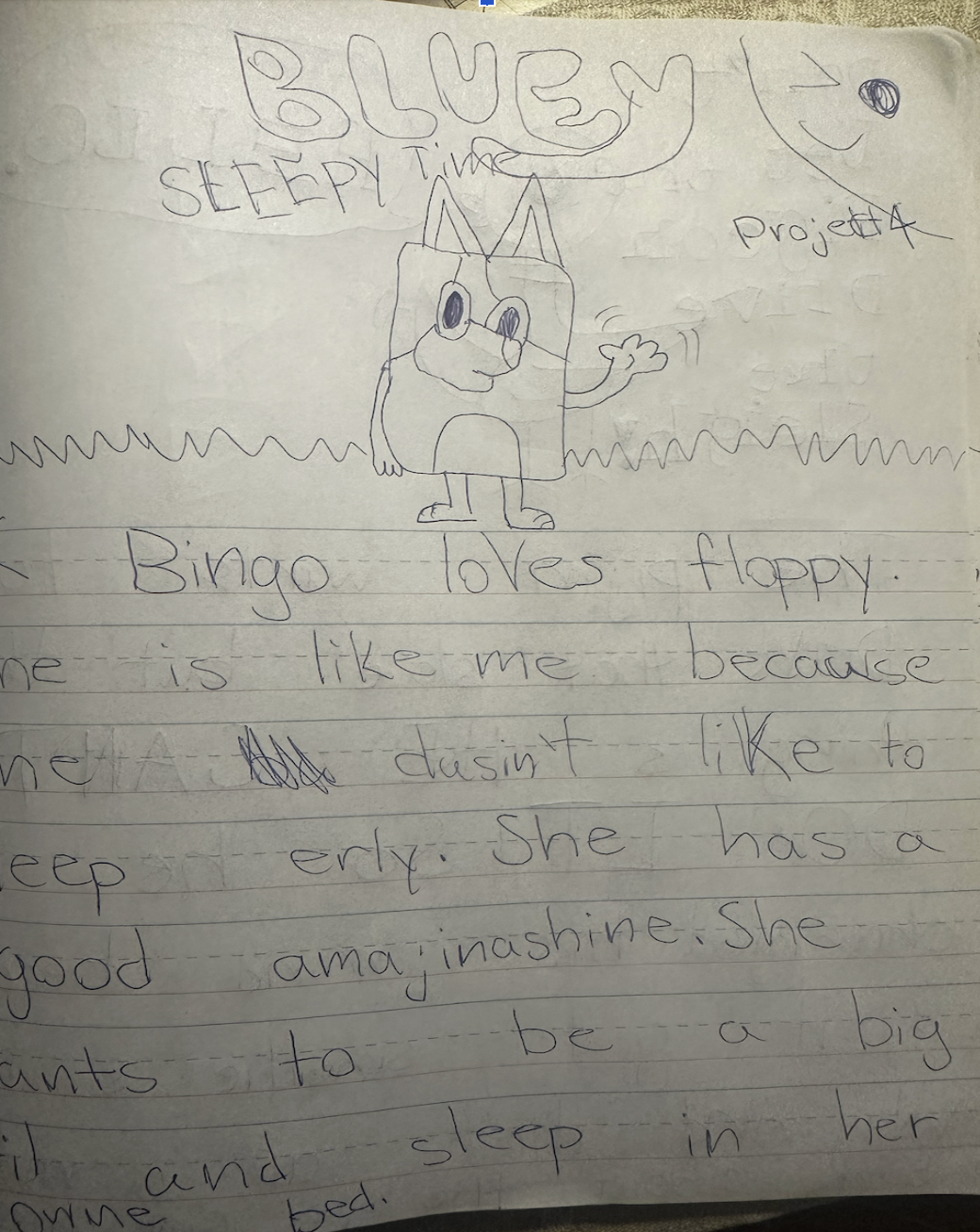
• draw pictures of the important events in the character's story
• write words or phrases describing each character
• Encourage taking chances on "juicy words" without worrying about spelling.
Card C — Comparing Characters
I DO
• Model a comparison sentence of the two characters using describing words.
"The Cat in the Hat is sillier than the Pigeon"
"Corduroy is kinder than Frog and Toad."
• Guide your child to explain with reasons why:
The Cat in the Hat balanced on a ball while holding a fish bowl.
The Cat in the Hat cleans up his mess with a very interesting cleaning machine.
• Socratic Chat !
Challenge:
Create a small presentation, poster, or drawing to convince family members which character is the "best."
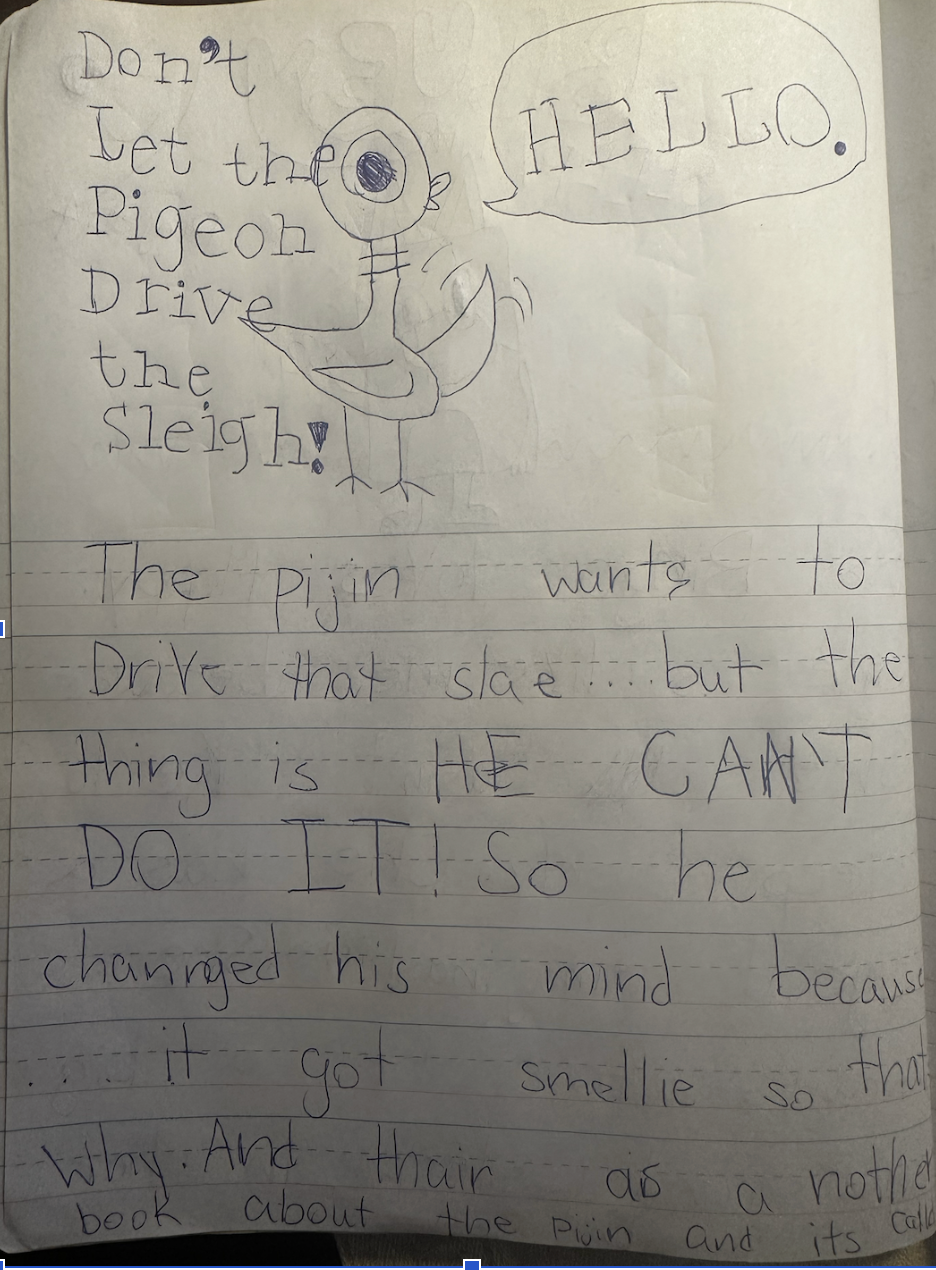
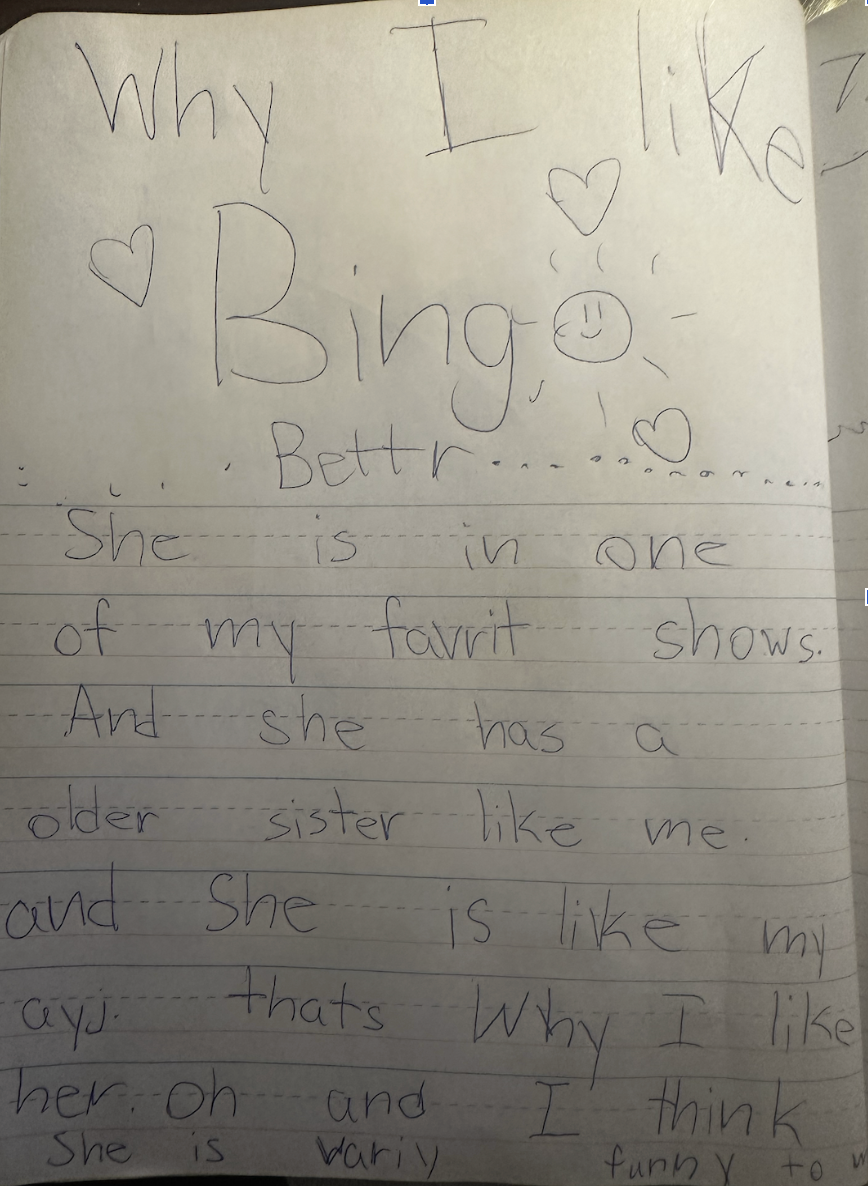
Social Emotional Learning
Each card is a single discussion — look at the image together, then talk through the reflection questions.
SEL 1
Listening
I know how to Listen to learn from others.
Look at the image of the listener on the back of this card together.
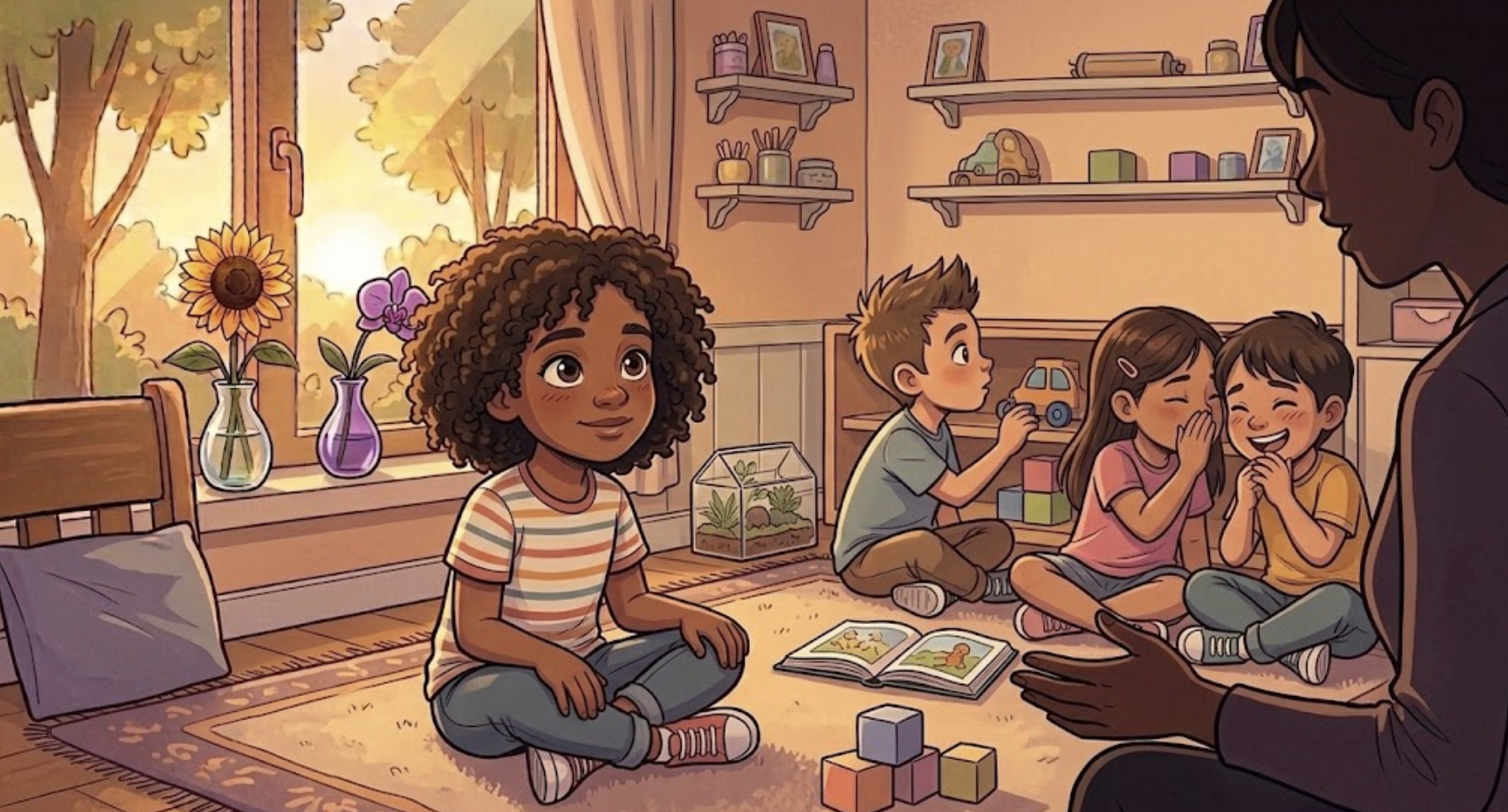
What do you notice about her eyes?
What do you notice about her hands?
What do you notice about her mouth?
How does this help your brain and ears do their job in understanding the speaker?
What can you do if you are having trouble listening?
SEL 2
Agency
I have agency.
Look at image A on the back of this card together. This is Ryan, he is nervous to ask to use the bathroom while the teacher is helping other students, but he needs to really badly.

Why do you think he is nervous?
What should he do next?
Look at image B. This is Lucy, she is looking for her homework folder as the class is packing up. Which is the right way to ask for help? Why?
1. (read in a whiny voice) "I can't find my folder. My mom is going to be so mad!"
2. (read in a frustrated voice) "Where is my folder!!!"
3. (read in a calm voice) "Excuse me, can you help me find my folder? I saw it on the table, but it's gone."
SEL 3
Empathy
I notice how other people are feeling and understand why.
Look at the images of the 4 students.
Can you decide which one looks happy? What about their face and body tells you this?
Can you decide which one looks sad? What about their face and body tells you this?
Can you decide which one looks frustrated? What about their face and body tells you this?
Can you decide which one looks nervous? What about their face and body tells you this?

Which student may have lost their favorite toy?
Which student got to go to a friend's birthday?
Which student didn't get a turn on the slide?
Which student had a friend who said something nice to them?
Which student is about to perform at her piano recital?
SEL 4
Forgiveness
I can forgive mistakes.
Look at the images of Ella running through the playground and knocking over Mason.

Do you think Ella hurt Mason on purpose? How do you know?
How do you think Mason feels?
How do you think Ella feels?
If you were Ella, what could you say to Mason so he knows this was an accident?
If you were Mason, what would you say to Ella?
SEL 5
Noticing Problems Inside
I notice my feelings in my body.
Look at the 4 images. For each ask the following questions:
Have you ever felt this feeling before? How would you describe it?
What made you feel normal again?
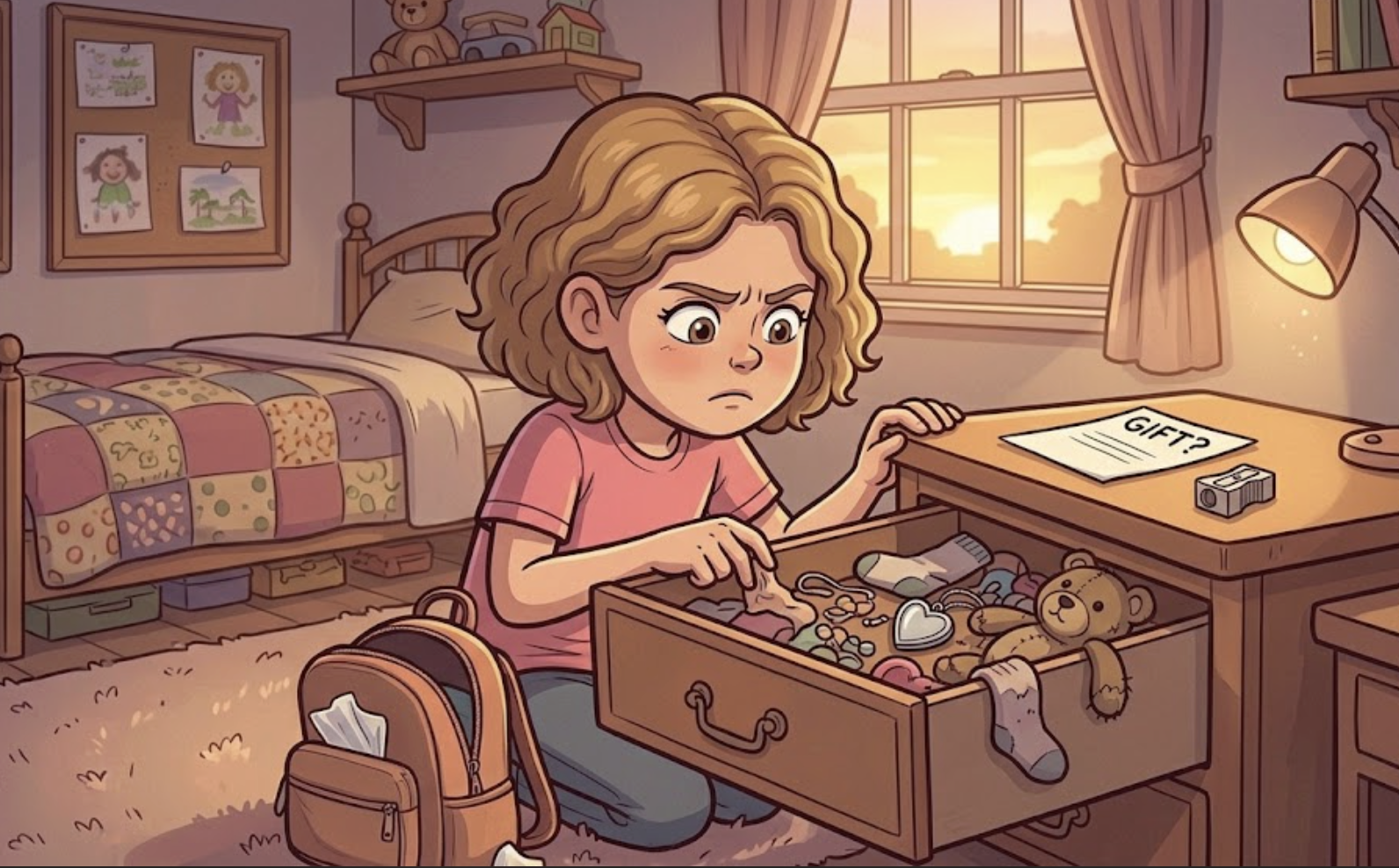
This is Rachel, who has lost a special gift from her mom. Her heart is beating fast and it feels weird inside her body. Her hands are a little wet.

This is Ryan, who just spilled his milk all over his lunch tray. He feels a burning sensation in his heart and the urge to scream.

This is Muhammed, who just received his math test back yesterday and it is a lower score than he hoped. His insides feel like they are dropping and his body feels heavy and tired.

This is Grace, who just made the winning basket in the game. Her body feels like jumping and screaming.
SEL 6
Solving Problems
I can solve problems.
Look at the image as I read this story of Daniel. Daniel wants to take a turn on the swings, but they are all being used. When he asks the other students if he can take a turn, they ask him to wait a bit longer.

How do you think Daniel feels?
What are some things Daniel can choose to do to solve his problem?
Would you rather find another activity or use your agency to make a plan?
Have you ever made a plan on taking turns with a friend? What did you say?
SEL 7
Being a Scholar
I know how I am expected to act at school.
Look at the two images. One of Charlotte jumping on the couch with her sister and one where Charlotte is walking in line down the hallways.
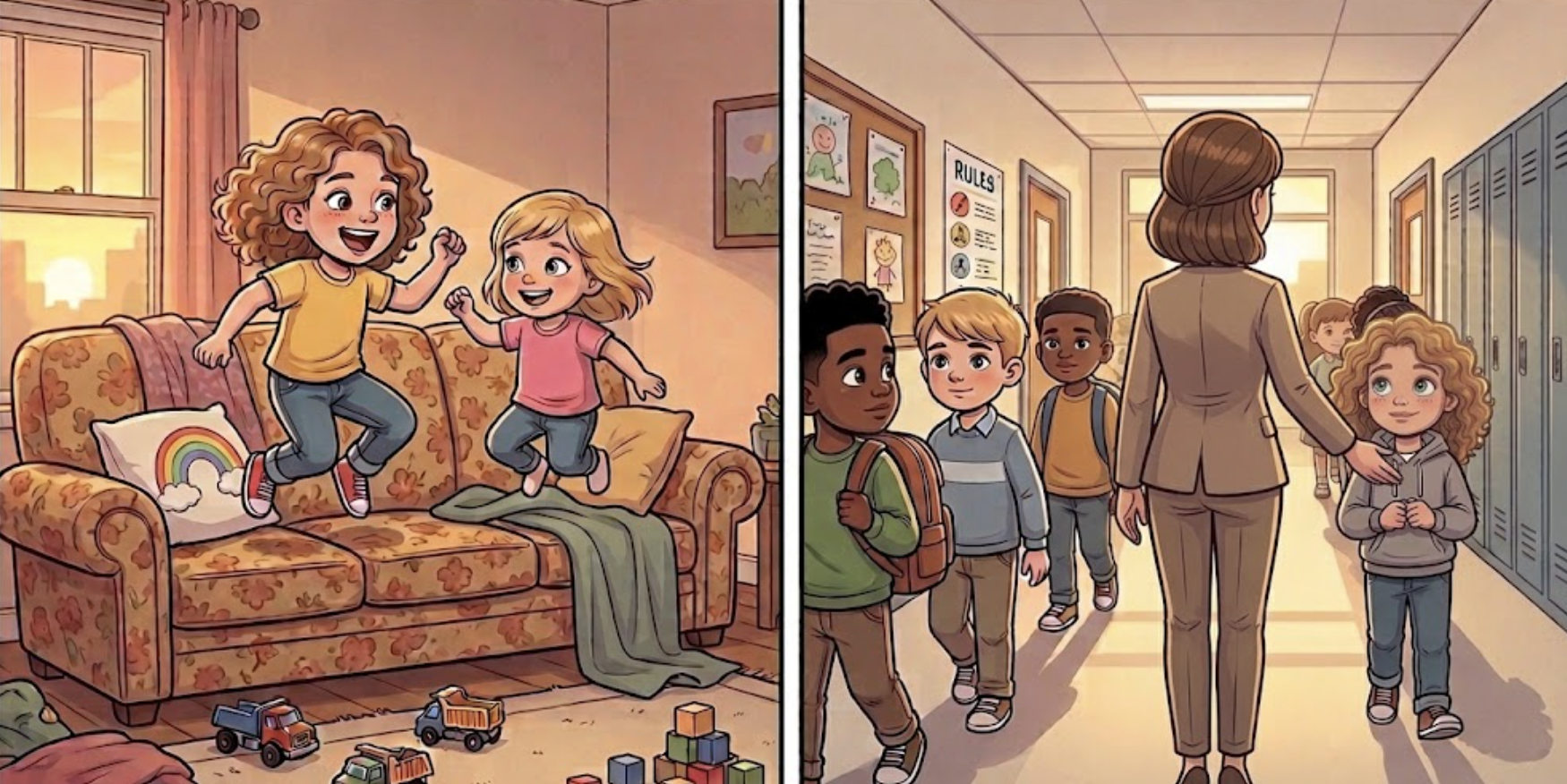
What are some of the things you can do at home but not at school?
Why do you think teachers line up their class?
Why is it important for the whole class that each student follows the rules?
Is it hard for you to sit at your desk and stay quiet at school?