Unlock Your Parent Potential
The most powerful learning tool your child has is already at home.
It’s cheaper than a tutor and much more engaging than a learning app.
It’s you.
Parent Potential will empower you to play a confident, meaningful role in your child’s learning during the critical kindergarten through third-grade years. This will not add another thing to your plate, but transform the time you already have by incorporating simple teaching best practices into 5 routines.

Our 5 Routines
-
sing an old school teacher framework of “I do”
”We Do” “You Do” you will be able to model your thinking out loud and prompt your student to become independent on certain skills. -
You may have already built a space to read stories together as they fall asleep. Using this routines, you will develop questions and prompts that siblings can even ask each other as they build their higher level analysis of literature and informational texts.
-
Using principals of Socratic Seminar, you will be able to use careful questioning and prompting to develop understandings of certain concepts. Sometimes these are around bedtime stories, but sometimes they make for a great car talk.
-
This might be the most fast moving routine of them all. It is important to find your preference, some parents enjoy using the encyclopedia or dictionary, some prefer Google, and others want to model how to prompt AI resources. These are all options within these routine cards.
-
You speak, they listen and write. From letter names and sounds to writing grammatically complex sentences, there are many skills covered by this routine that help your student be the best reader and writer they can be.
You will witness a deeper bond with your child as you engage in their educational journey together. You'll notice their confidence soar in the classroom as they become more comfortable with concepts that may have previously seemed daunting.
How To Get Started

The Learning Audit $150
60-minute Parent Potential virtual consultation to develop a personalized Routine Roadmap based on your child’s needs and your schedules.
The Next Level Monthly Mentorship ($650/semester)
60-minute Parent Potential virtual consultation to develop a personalized Routine Roadmap based on your child’s needs and your schedules
Two 30 min progress monitoring sessions per subsequent month, including report card review
Direct SMS and email support
COMING THIS SUMMER!!!
The Parent Potential Toolkit:
Self paced training modules on 5 Routines
A set of Learning Target Cards
A Learning Notebook
These resources help you support, introduce, and explain every Common Core standard for your child’s grade level in a way that feels natural for you.
With the purchase of the kit, you will have access through a QR code to a wealth of training videos, resources, and tips from teachers at your child’s grade level.
Professional Relationship & Conflict of Interest Disclosure:
Parents’ Potential is a private educational consulting service independent of any school district or educational institution. This consultation is provided solely in my capacity as a private consultant. Please note that this service is not affiliated with, endorsed by, or connected to my official duties as a school administrator with the Culver City Unified School District. This engagement does not constitute a school-based evaluation, nor does it guarantee specific placement, grades, or services within any public or private school system. By proceeding, you acknowledge that this is a private professional agreement.

Join a movement in the making!
Follow Parent Potential on one of these platforms and get insights from Mr.M that can transform your family’s life. There are so many moments each day as parents we can maximize with some tips and tricks from educators.
Virtual Workshops
Insight Articles:
You are the sunshine for your little flower.
A Father’s Story
“Like so many parents we found ourselves trying to teach our kids at home with mild success and the focus spent on just keeping the kids quiet so we could work from home. It didn’t take long to realize that without any experience, training or patience for teaching the only ones really suffering from distance learning were the kids.
My wife convinced me to ask for help.
In the meantime Chris was spearheading a vocational training for parents unfamiliar with education for the public charter school in Los Angeles where he serves as its principal and substitute math or language arts teacher for any class Kindergarten to Eighth Grade.
I’ve known Chris for almost twenty years and I always remembered he said, “in third grade, kids go from learning to read to reading to learn.”
Chris is a raconteur with deep practical knowledge of education and learning. He was kind enough to take my call and explain just a few basic concepts to me. I couldn’t believe how much confidence that tiny little bit of knowledge gave me and helped the kids become more intrinsically motivated to learn. Like flipping a switch.
From practical advice like “letting the kid have a say in the background of his zoom screen will give the kid more confidence and maybe get him to participate more.” to more direct instruction; “kids don’t learn gradually. They learn in jumps. It’s long stretches of seemingly no learning, then a light bulb, boom – they get it.”
Mr. M has seemingly seen it all. ”



Coming soon
The Parent Potential Toolkit
This summer, we plan to release our Toolkit in a limited supply. Our goal is to one day this will give access to the Parent Potential for many more families throughout the country. If you are interested in pre-ordering these, please click below.
Here is how it will work:
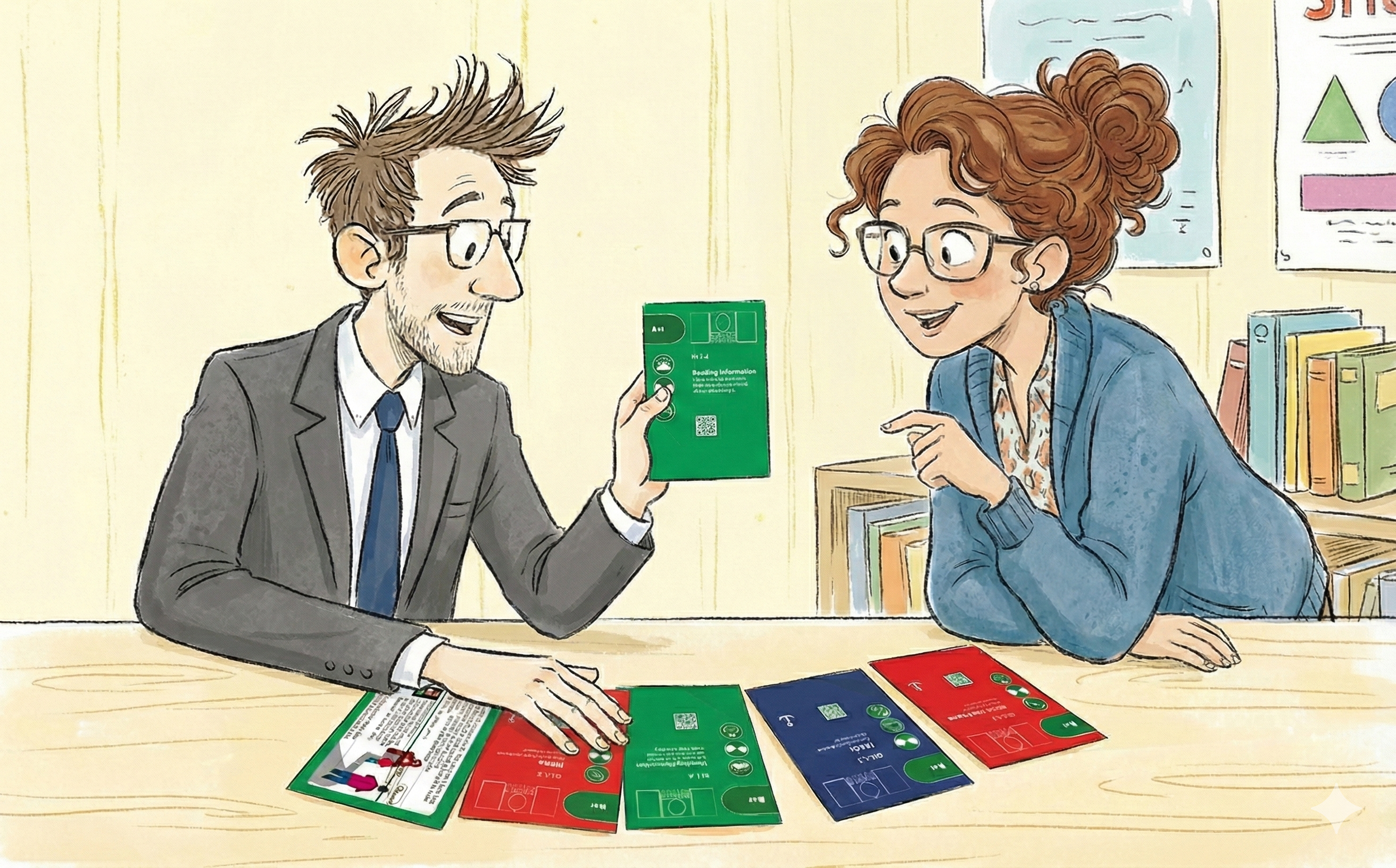
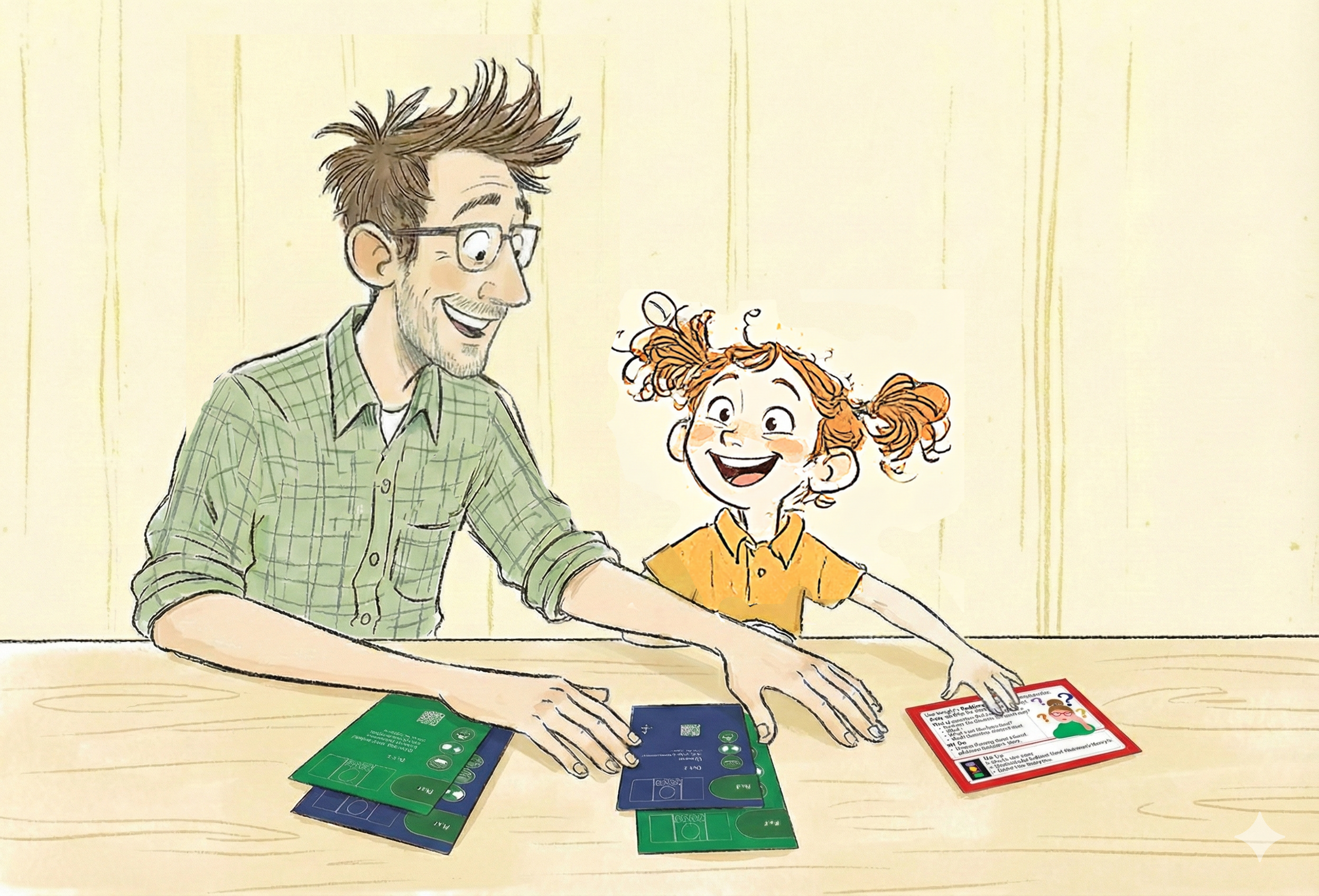
Choose a card
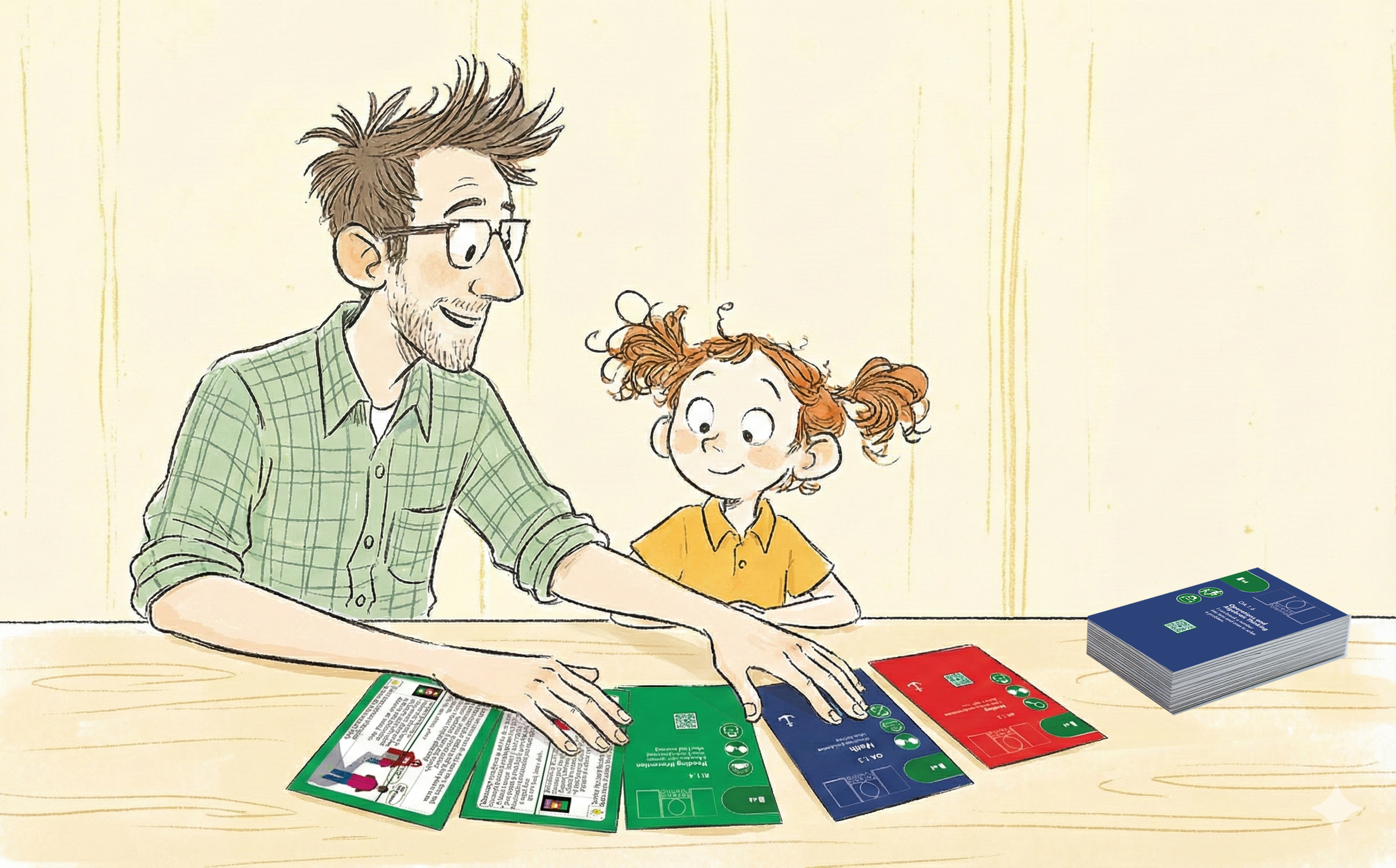
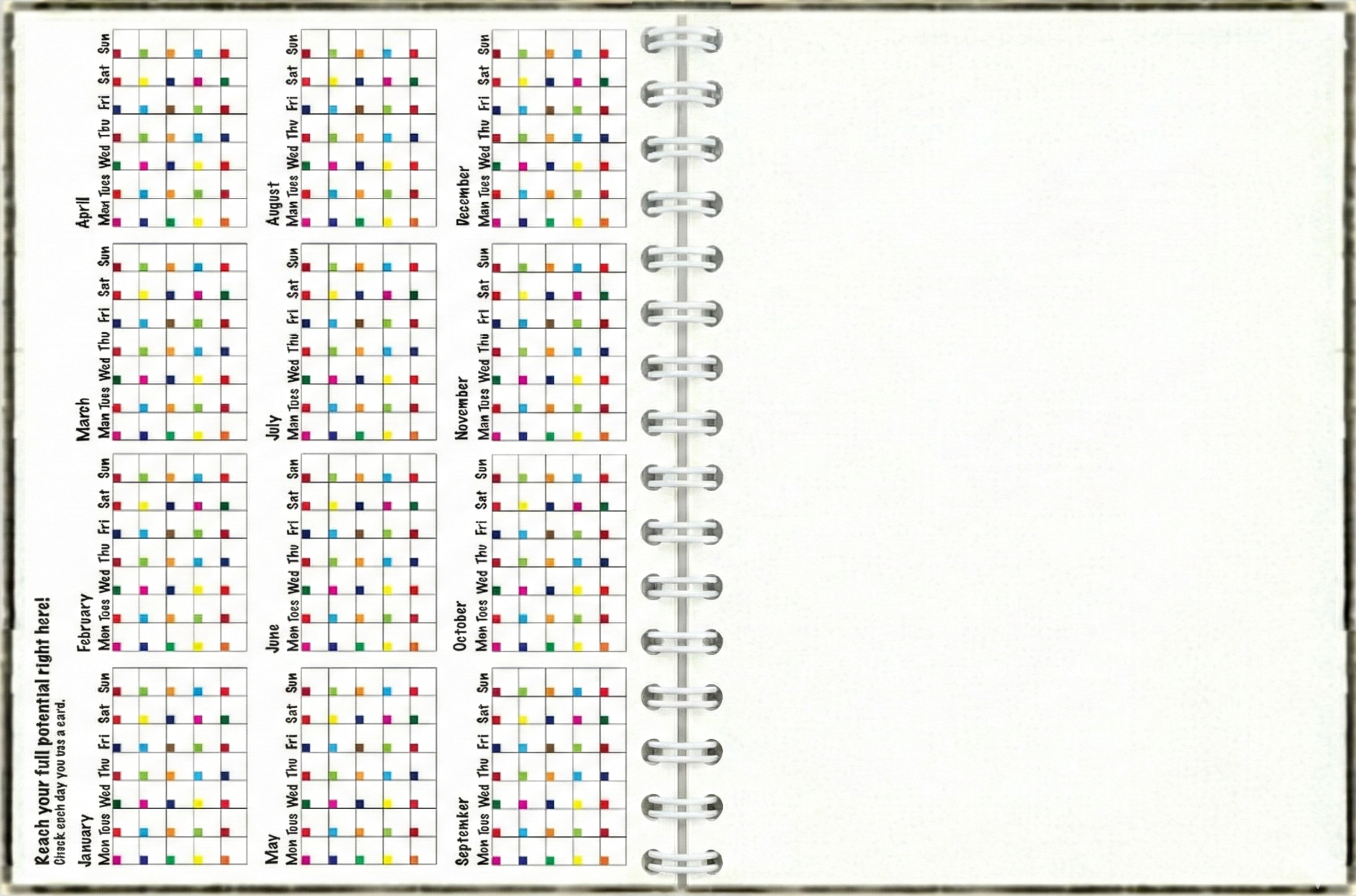
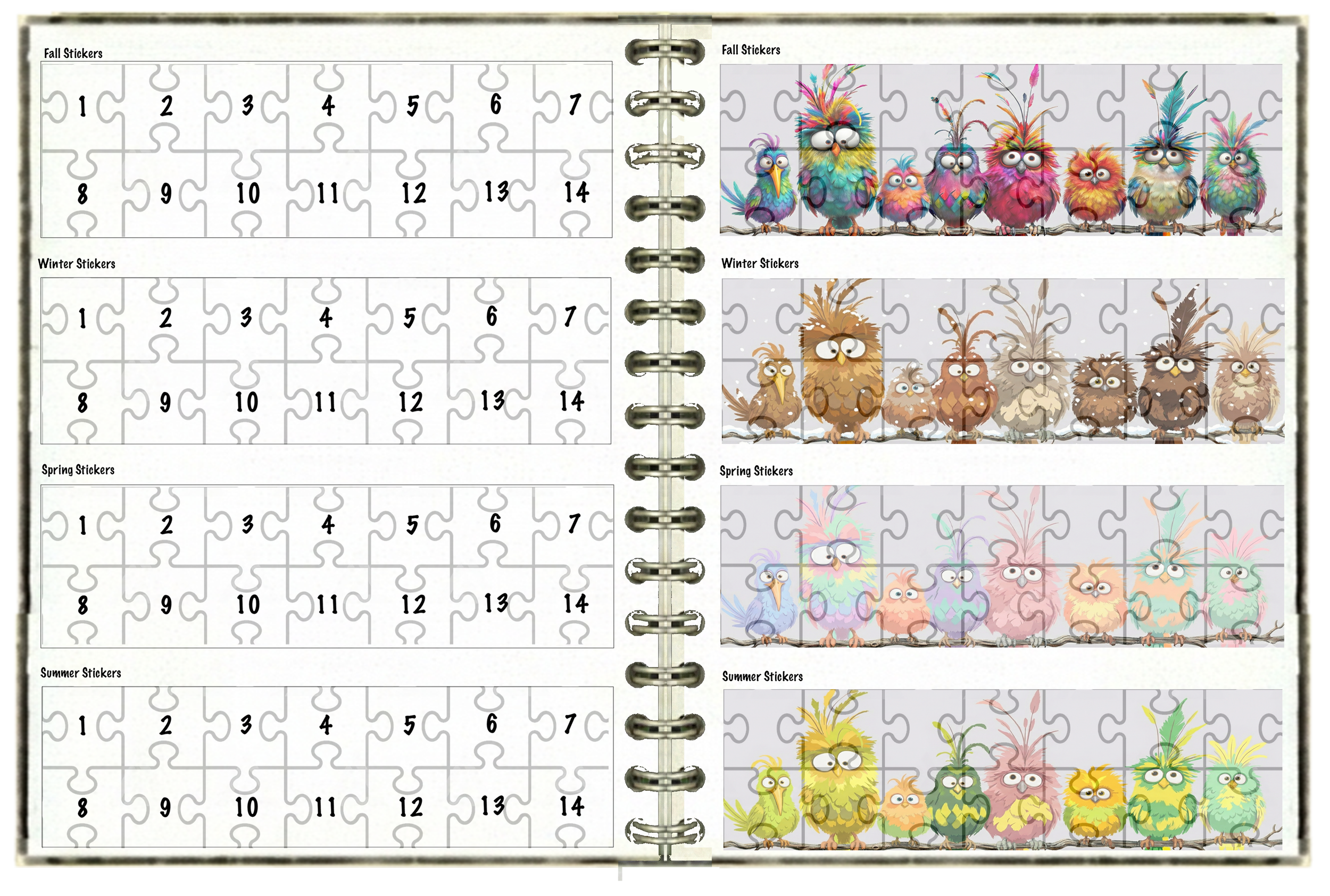
Use the notebook to make a few “appointments” for the month with your child. Use the routine icons on the front of the card to select what you both feel like doing.
It can be more efficient to sort out cards by the routines and place piles where you will use them the most!

Work on it
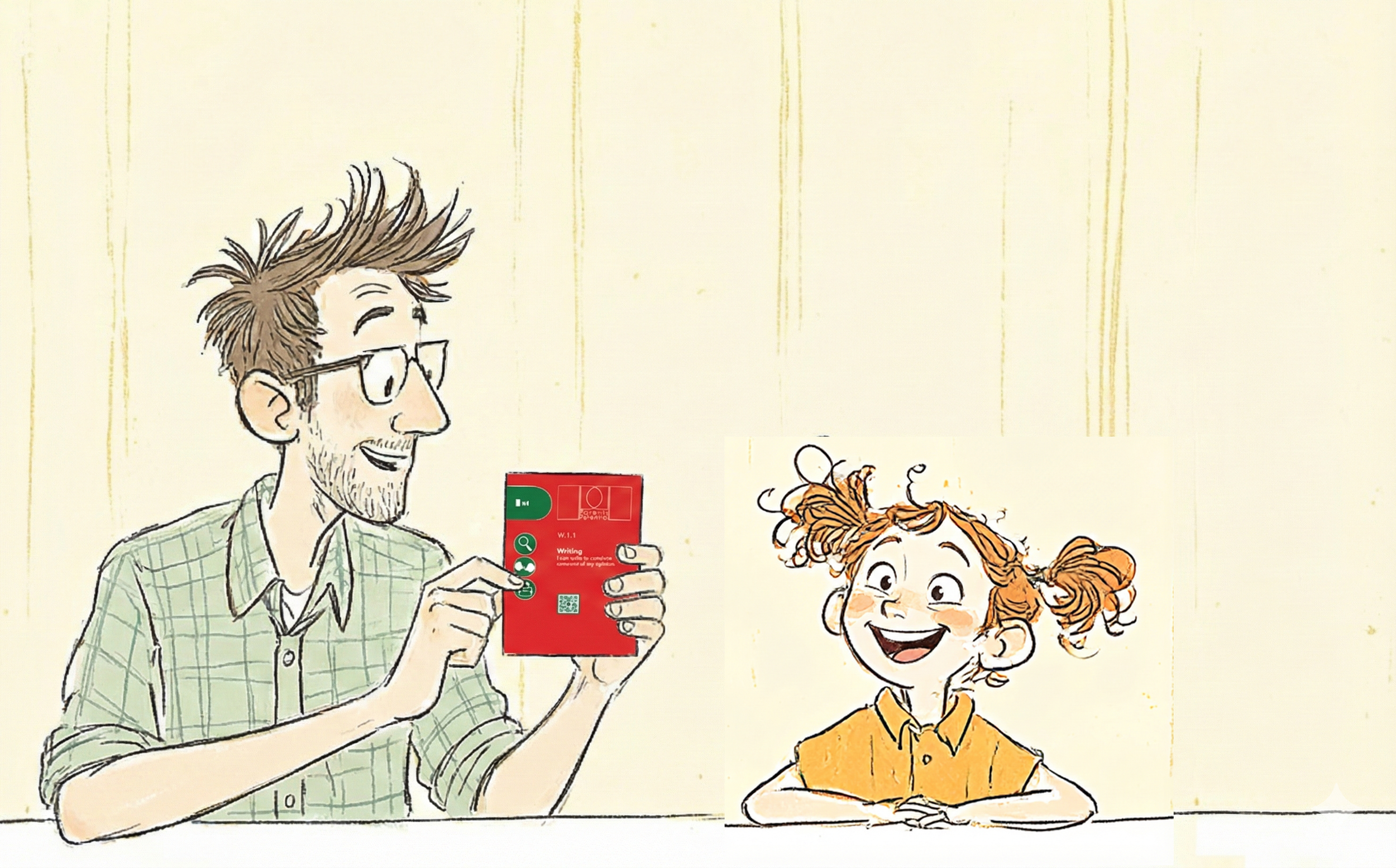
Use the back of the card to guide you through the scripted activity. Each card leaves lots of room to take this into new places and make it your own.
The QR code on the front of the card will take you to a grade level support page with further training videos for the routines and activities at this age.
If you are using a Project card, make sure you follow the series in order (ie Card A, B and C)
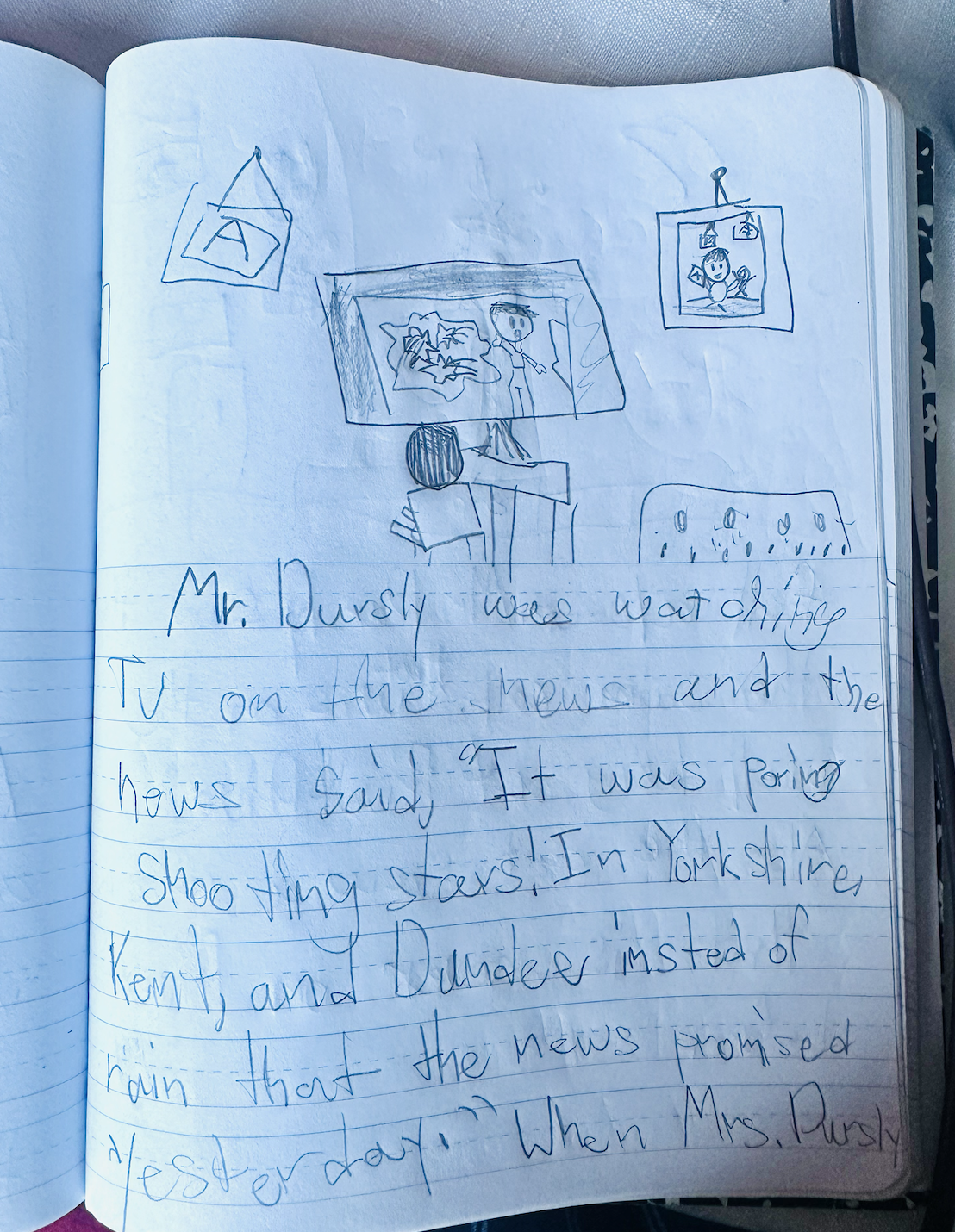

Celebrate!
After your 20 minutes together, soak in the moment. You have connected with something your child will see (or has already seen) in class.
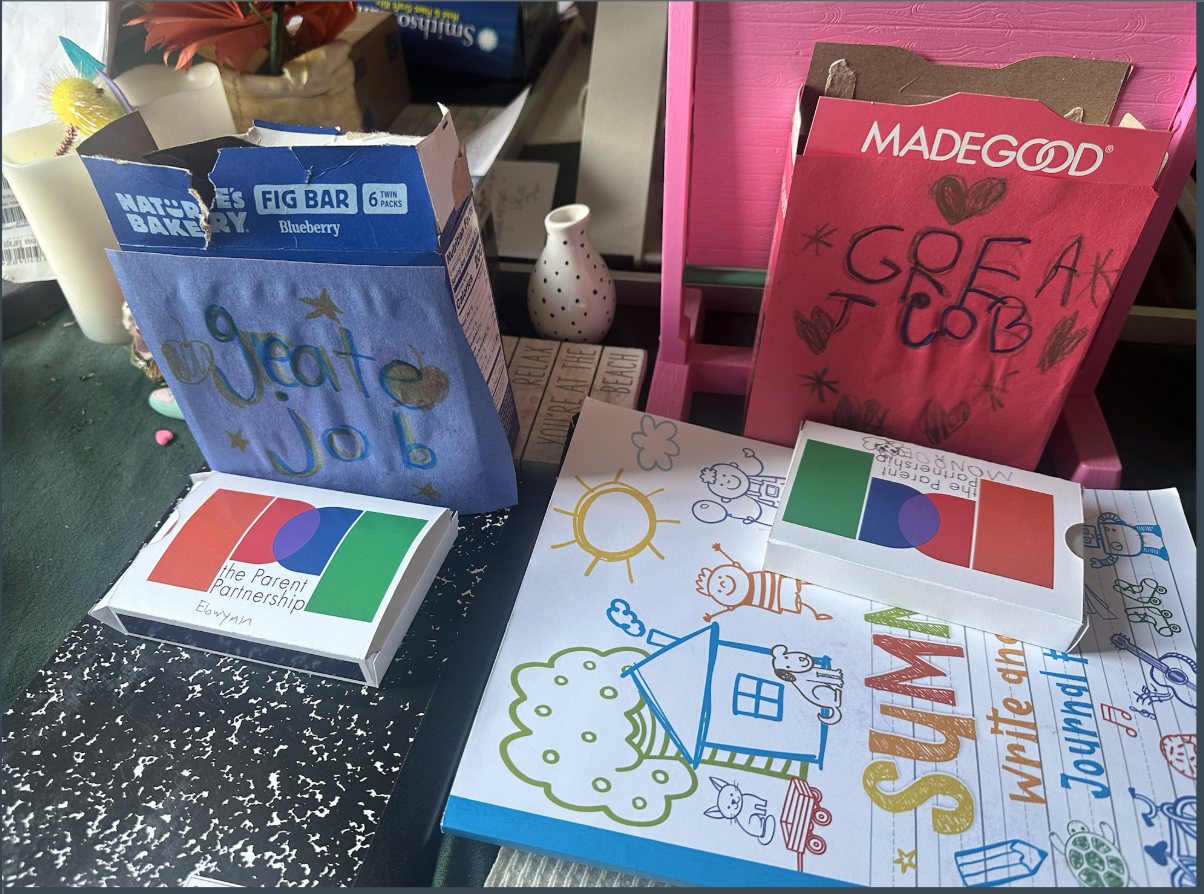
We recommend you build a special box or place to put the cards you finished and pull the next sticker on the puzzle in your notebook.
Help is there
If you run into confusion, you are welcome to click on the Learn More button on our website. Don’t be shy to share any confusion with your teacher, as this information allows them to target their time with your child in class!