

It Takes A Village
Hi, itsMr.M. I am a career educator, teacher mentor, and school leader. I began my journey in 2004 as an elementary school teacher in Downtown Los Angeles, where I quickly learned that academic success starts with breaking learning down to skill level and empowering students and families to partner with the school.
Over the years, I developed methods rooted in U—strategies that meet diverse learning needs and make content accessible to all. These practices became the foundation of my work both in the classroom and later as a principal, where I mentored teachers in both charter networks and traditional school districts.
With the introduction of the and their inking, I dove deeper into Bloom’s Taxonomy, an educational framework that describes levels of cognitive learning—from simple recall to complex analysis and synthesis.
My passion has always been clear: to help students and families take the wheel in their learning journey. That belief continues to drive everything I do.
I focused on empowering parents to become instructional aides at home. We provided them with grade-level learning targets and simple, effective routines to support learning—no tech required.
By 2022, our school, Everest Value, had set itself apart. Thanks to consistent use of these methods, our students showed significant growth on the SBAC (Smarter Balanced Assessment Consortium), the national benchmark for Common Core proficiency.
In 2019, 45% of Everest students were proficient in Math and ELA. By 2022, that number rose to 52.5%—while state and district averages declined. California’s average dropped by 4%, with LAUSD falling below 35% proficiency.
Below is a testimonial from Albert, a fellow parent who reached out during remote learning—and became one of our first success stories.



Project of the Month
Each month, we will share a family problem from our “project card” selection. We encourage our Parent Potential Family to upload a screenshot of your scratch paper work as exemplars for our next visitors. Here is our first challenge:
📊 Taking Inventory
Goal: Estimate, count, organize data, and compare quantities using graphs and tally marks.
CA Standards: NBT1.1, OA1.5, OA1.2, MD1.3, NBT1.3
Day 1 Estimating Quantities (CarTalk)
Use CarTalk to choose which 4-5 collections to use as part of a house inventory. We want to find items that would have quantities between 20 and 100:
LEGO pieces
Coins
Baseball cards
crayons
socks
toy cars
Ask estimation questions such as:
“Do you think you have more or less than 100 coins?”
“How many more LEGO pieces than socks do you have?”
“About how many socks do you think there are in the house?”
Write estimates in the notebook when you return home.
Day 2 Counting & Tally Marks (Modeling)
Gather the collections and count the actual amounts.
Model using the note book to make tally marks grouped by 5 then count by 5 to get your totals.
Model other methods like making piles of 10 and counting by 10s for each.
Create a data table showing the estimated and actual amounts together.
Day 3 Creating Bar Graphs
Use graph paper to create a bar graph to compare these amounts. Depending on the number of items you have tallied, decide on a scale for your vertical axis. For example: 1 square = 5 objects
I DO Model graphing the first total of items and estimate.
Use a ruler to make a line at the correct amounts and draw the bars
WE DO the rest of the amounts and estimates in the same way
Model how to use the Bar Graph to compare the data by asking and answering questions like:
Which item had the greatest amount?
Which had the fewest?
Which estimate was the closest to the actual?

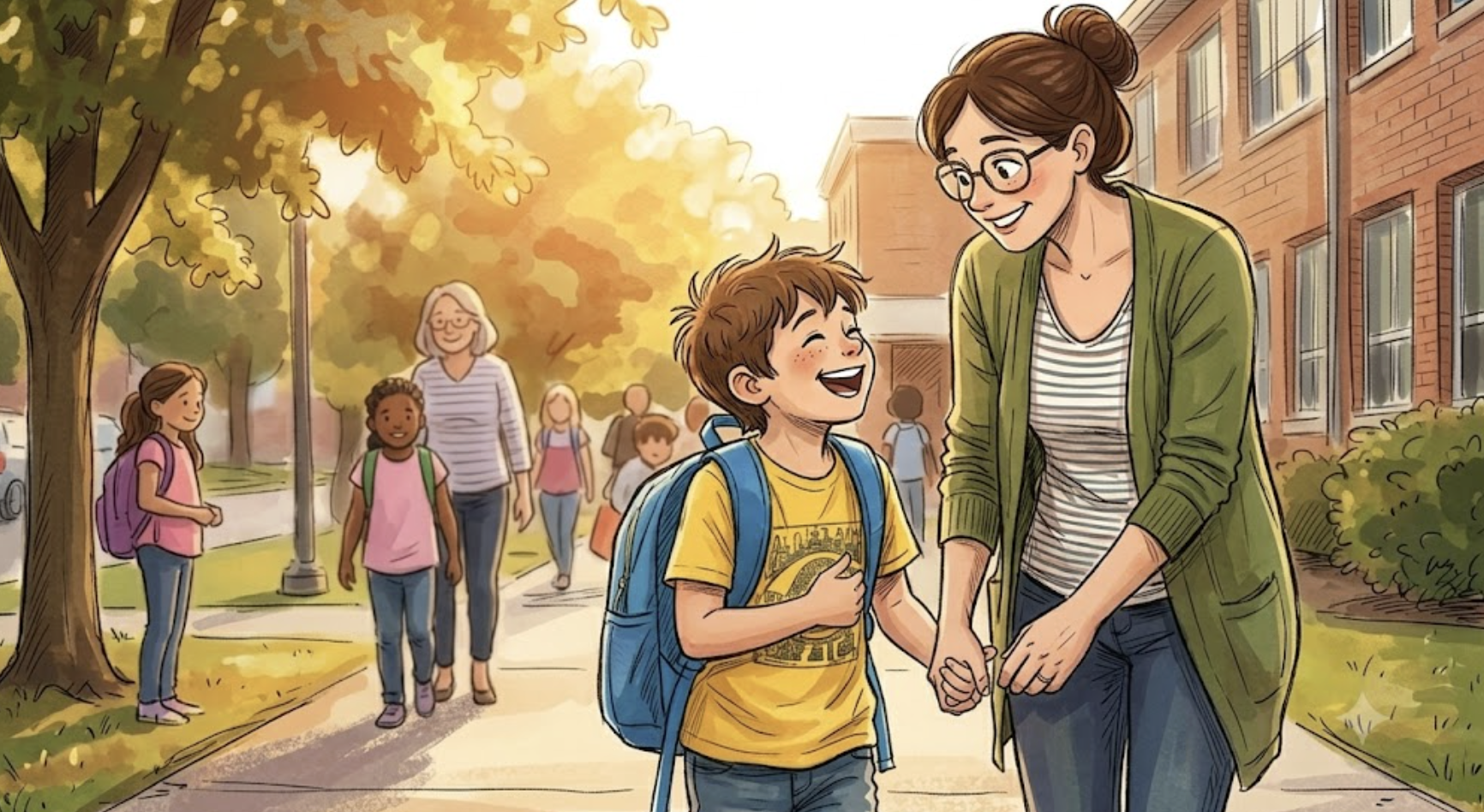
Back to School in 2026
The Most Important School Supply Isn't in Your Child's Backpack. It's your time.
Every August brings that familiar mix of excitement and uncertainty as a new school year kicks off. 🎒
After nearly 15 years as a school principal, I’ve learned one constant truth: schools can teach reading, math, and science, but we can’t raise resilient, confident kids without parents leading the way.
The world is changing faster than schools can keep up, from AI in the classroom to evolving social dynamics. But the most powerful tool your child has is already at home—your relationship, your listening ear, and your optimism.
The Most Important School Supply Isn't in Your Child's Backpack. It's your time.
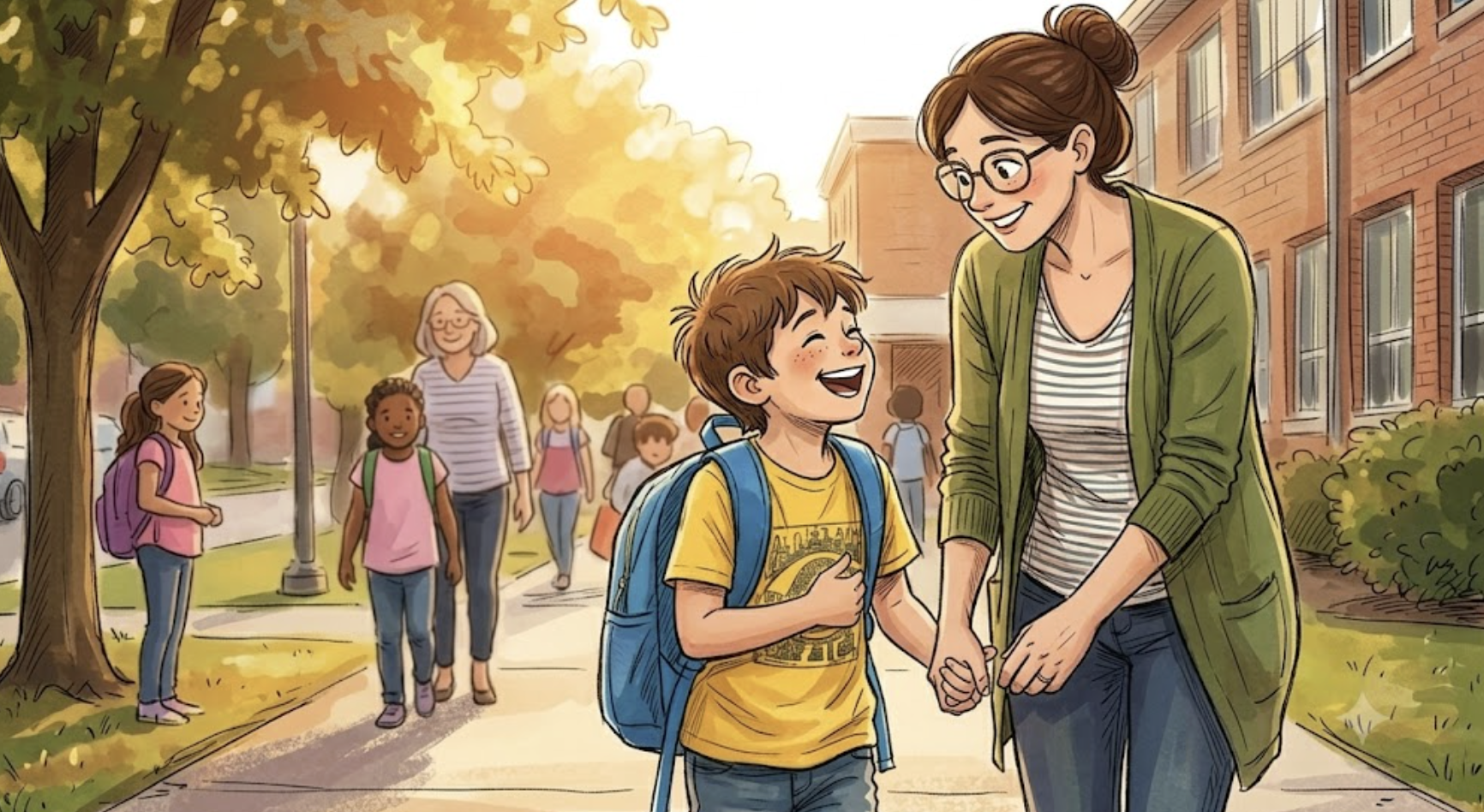
Every August brings a familiar feeling to parents.
It’s a special mix of excitement and uncertainty many of us remember from our own childhoods. Summer adventures come to an end, and a new school year begins, offering a chance to rebuild and improve the family operations “machine.”
For many families, the return to school also brings relief. The structure of the school day returns, schedules become predictable again, and children get back into the groove of learning and growth.
Over these next few weeks, you might be tempted to fall back into the habit of dropping them off and expecting the school to take over again. You can just focus on the supply list.
As a school principal for nearly 15 years, I want to disrupt this narrative a bit.
Classrooms can no longer do this alone.
I am asking you to rethink this relationship with school in 2026. We need your help. Not because schools aren’t committed or the teachers aren’t amazing.
The Job Has Changed.
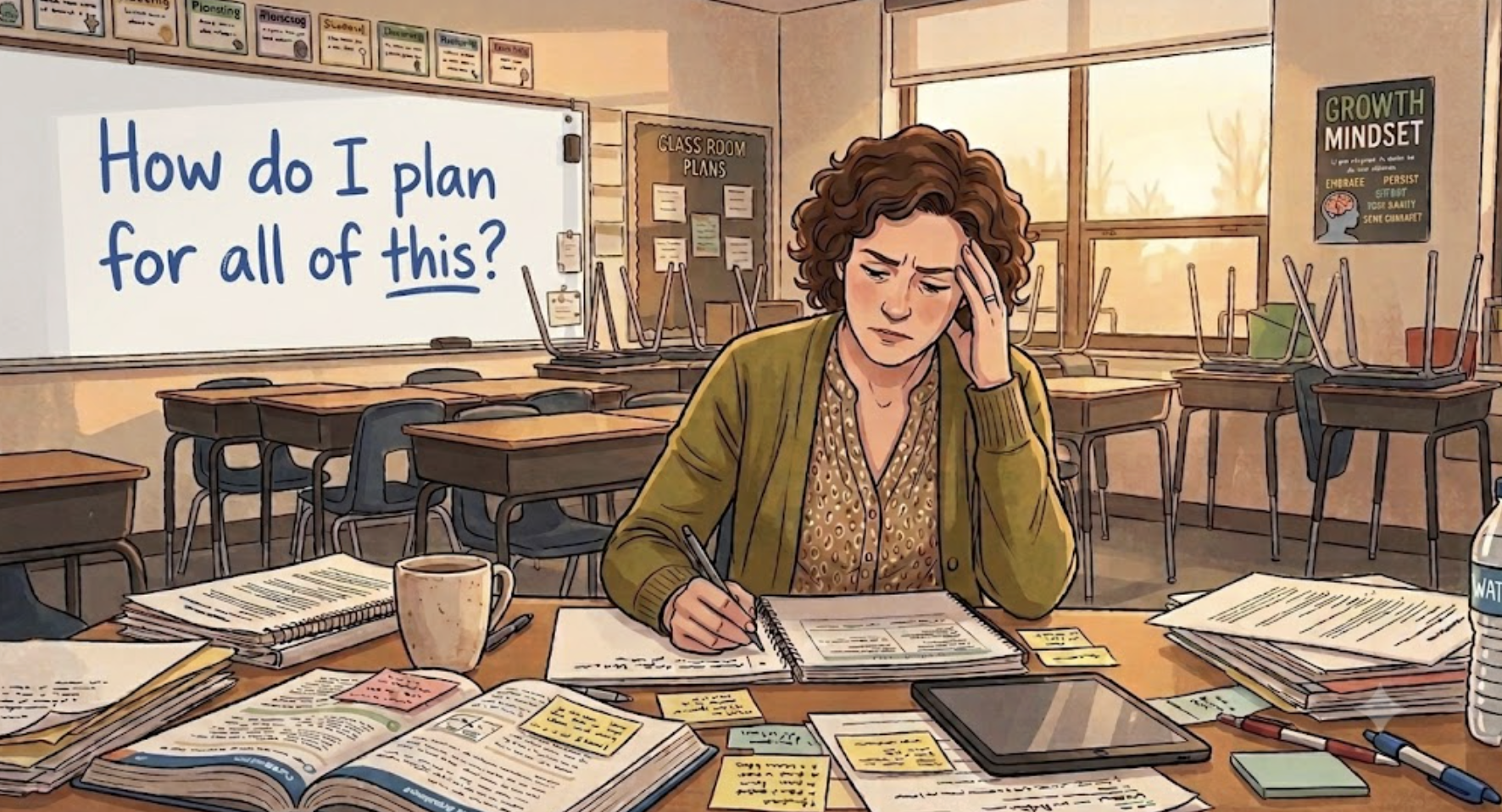
These next few weeks, teachers will return and unpack their classrooms. Principals throughout the country are preparing their trainings and need to brainstorm the “theme” for this next year. I have to tell you, it feels like there is an elephant in the room this year.
The world is simply changing faster than schools can keep up.
Take technology:
Not long ago, schools proudly invested in one-to-one devices and educational software designed to make learning more engaging.
Now, families do not want to see a screen in the classroom, and most schools have them buried in a closet.
Logically, there is a middle ground. While more face-to-face instruction is critical to learning, artificial intelligence is reshaping our lives completely. As the pendulum swings back and forth, the school will have to be very mindful of treading lightly on the range of family perspectives.
The result in most schools has become a muddled strategy that reacts instead of being proactive. It’s much more effective for the parent to lead this discussion directly. The skills our children will need ten years from now are difficult to predict. The school’s guess might be just as good as yours.
Take the classroom community:
After COVID, schools devoted more time to a new pedagogy called Social Emotional Learning, which was designed to explicitly teach students how to navigate friendships, regulate emotions, and resolve conflict.
At the heart of this philosophy is the belief that there are no inherently bad people. Kids are taught that people make poor choices due to their circumstances. While actions must carry consequences, they should also be met with room for forgiveness. These ideas have sparked deep and passionate conversations from parents seeking stronger punishments for students and families who make mistakes.
It has become clear that schools cannot define your family’s values.
There is no “correct” way to teach discipline, kindness, and respect. Reasonable people disagree. However, if you take a more confrontational stance to “advocate” for your child against any other families or school staff who get in the way, you risk sending the wrong message completely.
I have watched many parents model behavior that is unkind or disrespectful towards other adults, and this sends a powerful message to the kids involved. It’s more powerful than any social-emotional learning curriculum or even the greatest of teachers can handle.
With thirty students in a classroom, teachers simply don’t have the time to develop every child’s character in the deeply personal way that you can.
That’s your superpower.
Take advantage of the opportunities you already have.
As you and your child go to open house and Back to School Night, there will be a buzz of positivity. That’s what teachers do.
I ask you to take this opportunity to pledge your support for them this year. Maybe you won’t have time to volunteer, but there is so much more you can do to help at home.
Focus on creating a space to connect with your child regularly. For example:
Transform your drive home.
Instead of asking, “How was your day?”
Follow up with questions that invite conversation.
“What made you laugh today?”
“What challenged you to think differently?”
“What are you most thankful for?”
“What goals do you have for tomorrow?”
Children often need time before they’ll open up. When they do, resist the urge to solve problems or explain.
Just Listen.
Your attention is like sunshine on a growing flower. It tells them that their experiences matter to you.

Your Child Borrows Your Confidence
Parents tell me all the time how worried they are.
They are worried about the future.
They are worried if their child is making friends.
They are worried if they are falling behind.
They are worried if their child will be ready to face the world in 20 years.
Honestly... So am I.
The world our children will inherit looks completely different from the one we grew up in. But after watching thousands of students walk through school doors, I’ve learned one constant truth:
Optimistic parents have optimistic children.
There is no way to avoid obstacles that enter your life outside of your control.
Your student will face adversity.
You choose how to respond for them.
You don’t need to handle the problem for them. You don’t need to blame anyone.
Become a safe place for them to land:
A place where they can share their daily struggles and successes.
A place where they can figure things out, together.
A place where mistakes become conversations instead of consequences.
A place where they know someone is firmly in their corner.
When adults model calm confidence, they begin to believe the challenges they face are something they can overcome.
Remember, they likely have that same pit in their stomach as you do right now.
A Shared Mission
Schools will continue to teach reading, writing, mathematics, science, and history. But schools can’t raise kind, curious, responsible, and resilient young people without parents.
It requires a partnership.
As educators, we’ll do everything we can during the school day. As parents, you must take those opportunities around the dinner table, on the drive home, and during bedtime routines to have conversations that no school can ever replace.
Your relationship with your child shapes how they see themselves, and how they see the world.
Who knows what this world has in store for us from now until June 2027.
As long as we stick together, we can give children something more valuable than perfect grades or test scores.
We can give them the confidence to thrive.
Here’s to a wonderful 2026–2027 school year.

Mr. M | Founder & School Leader
When schools nationwide faced unprecedented disruption during COVID-19, Mr. M took a radically different approach: put parents first. By partnering directly with families and treating the home as an extension of the classroom, his strategy defied national trends. While student performance dropped across the country, Mr. M’s students achieved dramatic academic gains, setting a bold new standard for resilient, community-driven education.
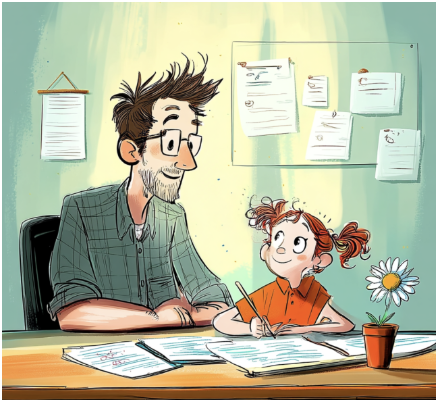
You Are the Sunshine on a Flower
Over the years, I’ve watched many educational theories cycle through schools. New curricula. New technologies. New programs. Each promises to be the solution for student success.
And yet, nationally, student achievement and student well-being continue to struggle.
Why?
I believe part of the answer lies in how far we’ve drifted from what children need most. Education has gradually shifted from a shared responsibility to something increasingly outsourced. Teaching has been reframed as technical expertise rather than a natural role families and communities play together.
As a result, many parents hesitate to step in. Education feels complicated and jargon-heavy. There’s a fear of doing something wrong.
So we hire tutors. We download apps. We even turn to AI.
However, there is an ageless truth in education, one that research continues to confirm:
Children grow best when they feel truly seen, heard, and supported by adults who love them.
Mastering your role as parent not by doing more, but by being intentional with the moments you have every day.
Christopher MedingerJan 31, 2026

If parenting were a river, 2026 is the year the whitewater knocks the paddle out of your hands and turns the map to mush.
Between Zoom meetings, the rapid rise of AI, and the logistical gymnastics required to get children to school, practices, tutoring, and the occasional dentist appointment, families are running on fumes. This isn’t the kind of tired a good cup of coffee can fix. It’s deeper than that.
After 22 years in education, 13 now as a school principal, I have watched modern parenthood up close. Each morning at drop-off, I see parents juggling water bottles, phones, backpacks, and a thousand invisible worries. Children are handed off to teachers with a mixed look in their eyes of love, guilt and hope.
Earlier in my career, when I was a classroom teacher, I didn’t fully understand this. I believed most students would thrive if families simply had more time to support learning at home.
Now, as a parent of two myself, I see the full picture.
Before we go any further, let me say this clearly:
You are doing far more than you think.
This article isn’t meant to add pressure. It’s meant to ease it.
Let’s find those small, ordinary moments you already have and make them matter.
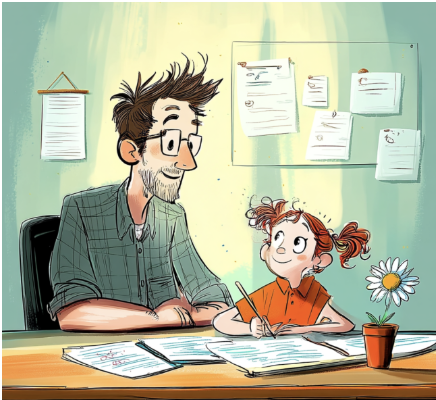
When Parents Listen, Children Thrive
Over the years, I’ve watched many educational theories cycle through schools. New curricula. New technologies. New programs. Each promises to be the solution for student success.
And yet, nationally, student achievement and student well-being continue to struggle.
Why?
I believe part of the answer lies in how far we’ve drifted from what children need most. Education has gradually shifted from a shared responsibility to something increasingly outsourced. Teaching has been reframed as technical expertise rather than a natural role families and communities play together.
As a result, many parents hesitate to step in. Education feels complicated and jargon-heavy. There’s a fear of doing something wrong.
So we hire tutors. We download apps. We even turn to AI.
However, there is an ageless truth in education, one that research continues to confirm:
Children grow best when they feel truly seen, heard, and supported by adults who love them.
Whether you are aware of it or not, you model for them with your thinking, speaking, and empathy in each interaction. When you direct your full attention to them, it is like providing sunshine for a flower. It is the fundamental source for a young and growing brain’s craving for new information.
This is grounded in decades of research on child development, attachment, and learning. It’s not about being perfect, it’s about being present.
When parents lead with listening—rather than correction or “I know best”—they build a deep line of trust. That trust becomes critical as children move into adolescence and beyond.
In a landmark study published in 2019—“Parental Warmth and Flourishing in Mid-Life”—followed participants from childhood into adulthood. The results were striking:
Adults who experienced higher parental warmth were 21% more likely to be flourishing in midlife
They had an 18% lower risk of depression
And a 17% lower risk of illicit drug use
Let that sink in.
The attention you give your child today doesn’t just help them survive third grade or even middle school; it echoes into their 40s and 50s. It might be your next bedtime conversation or car-ride check-in. It’s that moment when you put the phone down and really listen.
We can rebuild the Bridge between School and Home
With this mindset, parents can begin listening more closely to what their children are working on at school—and how they feel about it.
This may sound unpopular, but homework once played an important role here.
Historically, homework served as a bridge between school and home. Families reinforced skills and habits, and learning became visible. Over time, however, homework became associated with stress rather than connection.
A 2021 study found:
40% of parents reported frustration
37% said homework caused stress or anxiety
Over 75% communicated with teachers less than once a month
More than 25% said homework regularly interfered with family time
In response, many schools, including mine, scaled back traditional homework.

To be clear, this is not a call for more homework.
It is a call to rethink its purpose.
Homework was never meant to be about completion. It was meant to offer insight. When a child struggles, that moment is not failure—it’s information. Those few minutes spent listening and problem-solving together are where learning actually happens.
In response, many schools scaled back traditional homework, including mine. This, however, was not in the student’s best interest. I speak for almost all teachers when I say that homework is not about completion.
Your child’s assignment is about your student practicing a skill with you. If they have trouble and don’t finish. That’s ok. It’s much more important that you use these assignments as an intentional connection point to listen and learn what they did in school that day.
A Simple Guide to Providing Sunshine
Photo by Aaron Burden on Unsplash
During the first year of remote learning, I watched parents step into the learning process in powerful ways. When families were given clear, manageable routines, confidence grew—and so did student learning.
At our school, we saw academic growth not because parents became teachers, but because they became partners.
What remained clear then—and remains true now—is this: small, consistent habits make a meaningful difference.
Even twenty minutes of screen-free time a few times a week can reinforce learning, uncover confusion, and build confidence.
I’ve seen this not only as a principal, but as a parent to my own daughters.
Here are three routines that consistently support children—academically and emotionally.
1. Household Routines That Build Responsibility
Children don’t automatically know how to contribute to a group. That skill must be taught and practiced.
When children are given real responsibilities, they begin to see themselves as capable and trusted members of the family.
These routines teach children:
Their contribution matters
How small tasks support the larger group
What it feels like to be trusted
Pride in doing a job well
Simple roles like setting the table, organizing shoes, or managing a calendar will carry real weight when children know their work matters. Talking about their strategies to fulfill the tasks will guide them toward efficiency.
Resist the urge to rescue. Small mistakes in safe spaces build confidence that carries into the classroom and beyond. You are the best person on earth to give them constructive criticism in a way they can digest positively.
Photo by Vitaly Gariev on Unsplash
2. Drive-Time Discussions
Car rides, walks, and quiet transitions are some of the best opportunities for connection. It’s a low-pressure moment where kids often open up more freely.
These conversations help children:
Practice reflection and build empathy
Develop metacognitive and higher-level thinking skills
Feel that their voice matters to you
Instead of rapid-fire questions, aim for open-ended prompts. Listen without correcting or fixing. Over time, these small conversations build trust. Your child will see you are a good place on which to bounce their ideas off.
3. Family Storytime
Storytime is about more than learning to read. It’s about learning how to think like an author.
Reading together provides a wonderful opportunity to:
Develop Comprehension and vocabulary
Learn how to apply and imitate the author’s techniques
Develop Emotional awareness and empathy for characters
Make connections to prior experience to predict future outcomes
Model reading to them until they are ready themselves. Then choose a book just above their ability to read on their own. Take turns reading and stop to ask clarifying questions and predict what may happen next. For early readers, point to words as you say them so they begin recognizing them by sight.
After reading, I love drawing pictures with my daughter about what the movie was like in our brains. For older students, you can explore how the author made choices in dialogue or description. For younger students, you can study the characters and connect them to their life experiences.
Pay attention to energy levels. When your child is tired, stop. Learning works best when it’s welcomed.
These routines aren’t about structure for structure’s sake. They are about connection.
Whether your child is helping at home, talking in the car, or thinking through a story, they are practicing skills that matter for school and beyond.
Small moments, used with intention, can build responsibility, communication, reflection, and change lives.
At Parent Potential, we help families create meaningful learning moments during the critical kindergarten through third-grade years with convenient routines that fit into your busy life.
Through just twenty minutes a few times a week, parents can create consistent, high-impact learning moments that allow them to deepen their connection.
The most powerful learning tool your child has is already at home.
It’s cheaper than a tutor and much more engaging than a learning app.
It’s you.
How Schools Create Nurturing Communities in a World That Needs Them
While the adult world continues to dive deeper online and struggle to coexist, school systems are taking a stand. The education systems have actually spent the last few decades combating these trends. They have designed systems to build resilience, empathy, and a sense of belonging. I believe there is a way to replicate this for any community, with members of any age.
The world feels heavy right now. As we scroll through our feeds, we are met with headlines of global conflict, political bickering, and a digital landscape that often feels like an echo chamber of frustration.
How do we get the human experiment back on course?
As an educator and school leader, I feel like these answers come from a deeper understanding of how generations pass down their assumptions about life. Schools are a big part of this for sure. However, biology has built a key neural wiring in young brains that allows them to carefully observe and imitate the thinking and behavior of the adults and older kids around them. This unconscious imitation is the primary way we carry on all of our cultural practices, advance technologies, and pass on our wisdom to the future.
When the adults are intentional, we call this modeling. Unfortunately, with this process happening 24 hours a day, 7 days a week, it’s mostly not. When we model phone scrolling instead of talking, our kids pick it up. When we are interrupted by our kid with an urgent question, we are sending a clear message.
This phone possesses a mysterious importance beyond most things in this life.
Over the past 20 years in schools, I’ve seen how the smartphone age has been passed down. It has pulled kids away from meeting up after school to ride bikes. Now they run upstairs to get into online spaces where “group text” drama thrives.
The current level of isolation felt by kids is not normal. According to the CDC, the suicide rate for the 10–14 age group tripled between 2007 and 2020. Then COVID-19 stamped this behavior even deeper in the next cohort of students, as it replaced their vital window of learning how to socialize with learning apps. At schools, we can see how many kids haven’t learned how to find their identity within a group.
Now here comes some good news…
While the adult world continues to dive deeper online and struggle to coexist, school systems are taking a stand. The education systems have actually spent the last few decades combating these trends. They have designed systems to build resilience, empathy, and a sense of belonging. I believe there is a way to replicate this for any community, with members of any age.
The Three Pillars of Modern School Communities
(Warning: Minor educational jargon ahead)
Social Emotional Learning gives one the tools to understand their emotions and develop empathy for others.
Positive School Climate builds a healthy ecosystem for one to handle issues and help each other reach their best.
Restorative Justice develops a community understanding of how to handle someone who is harmed or makes a mistake.
Unlike adults, kids are now being taught this as regularly as science or social studies. As we look a bit deeper into these concepts, let’s explore how this might apply to a 40-year-old working parent who is stressed out by 2026. The irony here is that our children can be a great resource to help model these strategies for you!
Social Emotional Learning (SEL)
The Skills required to be Human
Social Emotional Learning standards were first developed in 1994 by the Collaborative for Academic, Social, and Emotional Learning (CASEL). This broke down emotional learning as a set of skills to be mastered, much like in math or reading.
They began with the following 5 core competencies:
Self-Awareness: Identifying emotions and recognizing personal strengths.
Self-Management: Managing stress and controlling impulses.
Social Awareness: Developing empathy for others’ paths.
Relationship Skills: Practicing clear communication and active listening.
Responsible Decision-Making: Identifying problems and finding equitable solutions.
At home, these lessons would be easy to integrate into dinner tables and car rides. In dealing with moral values in public school, there is a need to stay clearly on a secular path, but at home, your religion would greatly reinforce this.
As a teacher, one of my favorite programs, Second Step, is one of the first pioneers in the field. This program gives pictures of students in “what-if” situations, and facilitates discussions from the class on what would be the right next moves.
Let’s try one for you.
Imagine this:
You are reading an email from a client who feels like the service you offered wasn’t satisfactory. You realize he has included your boss in the message to ask for a partial refund.
Ask yourself:
How would I feel inside my body?
What might I do if I try to respond before I use a calming strategy?
What information must I get from my client to resolve this situation?
What email could I respond with that would begin to solve the problem?
The answers to these questions are not easy. Being able to calm one’s emotions is required for the brain to take a measured approach. Your initial response can make all the difference. These soft skills are what employers will be looking for as technology takes over skills and expertise.
These moments come up many times in a week. Finding time to reflect on your day’s ups and downs allows you to see the places where you can improve your relationships the following day. We teach our students to form a cycle of continuous improvement through reflection and change.
POLL
Where do you spend your best time reflecting on SEL in your life?
Car
Shower
Before Sleep
Excercise
Other
2 VOTES · · SHOW RESULTS
Positive School Climate
Intentionally creating the world we want around us
Zooming out to a more macro view, we have School Climate. While there is a cumulative effect of developing every individual’s social-emotional learning, more is required to sustain a nurturing environment for everyone. I have observed that schools can develop negative cultures fairly quickly, but it can become quite hard to shift it positive.
The same is true in Adult World. While it may be easy to be nice if you live in a cozy neighborhood or a vibrant city, it is exponentially harder to develop your SEL skills if you are in an unsafe or toxic environment.
The California Department of Education takes positive school climates very seriously with school and district leaders. They began monitoring data using the California Healthy Kids Survey in 1997 as part of this new wave of SEL. This pressure on public schools pushed educators to design practices so schools could proactively build positive communities. In this moment, almost every educator turned to a seminal educational theory called Maslow’s Hierarchy of Needs.
In the 1940s, Psychologist Abraham Maslow found that basic human needs must be met before the brain can open up the centers for learning and emotional growth. Personally, I can say this theory guides 90% of what I do as a school leader.
Here is how the brain builds towards Self-Actualization:
Maslow’s Theory is a major reason why we give students free lunch and make our school campuses so secure. As you move up the list, it becomes difficult to design systems that will meet students’ needs across any campus.
Teachers see this play out in classrooms every day, because unmet needs aren’t quiet. They show up as disruptive behavior. They show up as disengagement. They show up as students underperforming. In Adult World, we might see the analogy with the trolls online or the guy behind you honking his horn.
Creating a campus that ensures all students feel like they belong, have self-esteem, and are ready to self-actualize may be the hardest thing a principal has to do. Here are two ways that have become widely viewed as best practice:
A Shared Set of Community Values
Most schools have a banner somewhere on the side of the school with an acronym like PAWS, WAVE, or CLIMB. These letters stand for a set of character traits the school emphasizes with students. I might be a C for Collaboration or P for Perseverance. This is a shared moral language. These simple letters bind the community in ways of understanding their journey together through life.
If we all believe in perseverance, then at any point in the day, if we see another person struggling, we pat them on the back and urge them to fight on. If we all believe in innovation, then we probably host science fairs and fill the calendar with student empowerment activities.
The power of the collective mind is real. At its best, schools build the capacity of families to use the same language at home. Principals use Coffee and Chats as training grounds for big-person moral discussions, so the adults around the village are all modeling at their best.
Ask yourself:
What are the shared values or “norms” in your workspace?
Do people follow them? Do any resonate with you?
Are they clear and objective enough to apply in real life?
Activity:
Try to create an acronym for your workplace with your favorite letters. (ie. Self-control, Collaboration, Innovation, Accountability
Leave them in the comments!!
Positive Behavior Intervention
Another best practice in reaching the highest levels of Maslow is Positive Behavioral Interventions and Supports (PBIS). This movement traces back to research at the University of Oregon in the 1980s and was formally included in 1997, alongside other school climate legislation.
At its core, PBIS intentionally “stacks the deck” toward positive choices by emphasizing reinforcement over punishment. A key principle is training staff to narrate the expectations they want to see in students as much as possible.
“I like the way that this table is working quietly.”
“I like the way this person helped that person clean up!”
By the early 2000s, PBIS spread rapidly through schools across the country, as suspension data dropped. According to a study in 2025 by Alexander Eser, schools that consistently implement PBIS see 20–30% fewer disciplinary incidents and up to a 50% reduction in suspensions.
According to the research, students should hear at least five positive acknowledgments for every corrective one. Teachers are also expected to communicate more positive feedback to families than negative, which goes a long way in building trust and partnership rather than defensiveness.
Inside classrooms, PBIS often shows up as intentional community-building woven into the daily routine. Many teachers begin the day with activities like Circle Time, which give students regular opportunities to practice empathy, accountability, and problem-solving. These structured conversations help students learn how to listen, reflect, and take responsibility for their actions.
Over time, students begin to see themselves as citizens of their classroom, and they might begin discussing issues they want to resolve themselves. Students begin to take ownership, not just for their behavior, but for maintaining a respectful, supportive environment where everyone belongs and matters.
At the schoolwide level, most public schools now have a PBIS team formed from teachers, administrators, and often parents who work beyond the school day to shape campus climate. These teams organize assemblies, guide professional development to create shared moral language, and create avenues for student voice through leadership groups, student government, or school newspapers. In many ways, they help sustain the moral standard of the school community.
Think of what an Adult World PBIS team could do to!
Ask Yourself:
In your workplace, have you recognized a colleague’s hard work publicly?
Try this at work.
For the next week, focus on “catching people being good” rather than dwelling on the negative, and send positive emails.
Restorative Justice
Moving Beyond “Good” and “Bad”
Restorative justice in schools grew out of broader restorative justice movements in the 1980s, which emphasized repairing harm and rebuilding relationships rather than relying on punishment alone. Educators began adopting these ideas as a response to zero-tolerance policies that often led to suspensions, expulsions, and fractured school communities. By the early 2000s, restorative practices were increasingly used in schools to address conflict and encourage accountability.
To understand how these work, it may help you to imagine you just picked up your child from school in tears. As a parent, I know there’s nothing harder. Those drives home can quickly fill with emotion. Even with the best intentions, it’s easy to project your adult assumptions onto children’s conflicts in an attempt to protect them.
“Oh no, Johnny is doing that again… he’s the kid who always—”
This mental sorting of children into “good” and “bad” categories is natural, but can be damaging to the community. Before Restorative Justice, schools did this themselves. However, we learned that those labels stick. Kids internalize them, shaping identity and future choices for many years. This doesn’t lead to safe communities at any age.
There Are Only Choices
In Restorative Justice, we frame behavior as a series of choices made in a context. We all make hundreds of choices each day. Some are low stakes, but others can be pivotal.
What clothes should I wear?
What do I want for lunch?
How will I navigate this tension I am feeling with a loved one or coworker?
When students make good ones, we celebrate. However, when they make harmful ones, we must respond calmly and intentionally. We must explore the contexts that caused them. Yes, consequences still exist. But instead of shame, they are paired with reflection, accountability, and repair.
A key practice schools use to analyze student behavior is called Functional Behavior Analysis (FBA), which also emerged from the landmark legislation in 1997. FBA is a structured, problem-solving process designed to uncover why a student engages in a particular behavior by closely examining the context in which it occurs. Educators often use an “ABC” chart to guide this process. They look at each behavior in three stages:
Antecedent (what happens before the behavior)
Behavior (the observable action)
Consequence (what happens after).
Through this lens, teachers can identify the function the behavior serves. For example, missing breakfast or facing a challenging math assignment (antecedents) may lead a student to argue with peers or defy the teacher. The three most common functions of disruptive behavior are seeking attention, avoiding a task, or regulating emotions.
Once the underlying function is identified, the school teams can design targeted, proactive supports that teach replacement skills and adjust the environment to better meet the student’s needs. Rather than reacting to behavior after it occurs, educators can intervene in ways that prevent problems and promote more positive outcomes.
For instance, if a student is seeking attention, reprimanding them in front of the class may actually reinforce the behavior. Instead, a teacher might provide positive attention through classroom responsibilities, leadership roles, or special projects that meet the student’s need in a healthy way.
When used effectively, FBA shifts discipline away from guesswork and punishment and toward thoughtful intervention grounded in understanding and prevention. In many cases, students act out to gain attention from parents who may be distracted by work or other stressors. It’s important to keep an open door to listen to your child and student before they resort to acting out. Your supportive conversations will likely prevent them from making a bad choice at school.
Let’s reflect as a parent.
As a principal, I can tell your impact at home doesn’t stop when school doors open. Families are critical allies in modeling the shared values and behaviors we need in our community.
Please treat every student in your child’s class with empathy. Avoid labels like “bully.” They stick and limit any growth potential. Often, students labeled as “bullies” are carrying significant pain of their own. If given proper support and guidance, I have witnessed many develop empathy and become true leaders.
No child wants to be a bully
It is also important to see that the students who report sincere concerns are not tattling, but fulfilling their promise to the community with courage. There has been a rise in apathy in our recent generations, and it’s important that we encourage this. While a bystander in society might be passive, we want our children to be upstanders.
Lastly, it is important to trust the school when an incident occurs, even as the parent text threads and student stories might draw you into a conspiracy. Trusting the process doesn't mean being silent, but it means approaching the school as a partner rather than an adversary.
While there is a chance an adult staff member made a bad choice, it is much more likely that they are telling you the truth. The school may seem like it is hiding things, but most of the time, this is due to the Family Educational Rights and Privacy Act (FERPA), which prohibits schools from sharing information about other students. Here is the typical process we go through to investigate a bad choice:
Statements are gathered to understand what happened and who was impacted
Responsibility is often shared once everything is unpacked
The group discusses how the harm should be repaired in the community
Students reflect and take ownership
POLL
How much do you trust your school to handle bullying?
My school has created a safe space
My child is scared to go to school
My kid is ok, but I am worried
1 VOTE · · SHOW RESULTS
Moving forward as a Partner With Your School
We appreciate you taking the time to complete this article. You are off to a great start!
Your next steps might be:
Identify moments where you can model SEL strategies and, when appropriate, share how you solved your own problems with your child
Make a new parent friend at dismissal
Learn the acronym on the poster at your child’s school and pledge that you will follow these moral values.
Catch your kids, coworkers, and spouse being good
Ask restorative questions about any conflicts at school or at work. Identify what might have been the functions of the choices made.
Interested in joining the Parent Potential community?
We are building a movement to help parents navigate raising kids in 2026. Each day, each car ride home is a chance to be a part of the solution! Like or subscribe to Parent Potential on the following platforms or visit our site for more tips, webinars, and other resources.
With 5 easy to learn routines and a toolkit of a notebook and grade-level cards, you can make a tremendous impact with 20-minute sessions that can fit right into your typical busy week. With budget cuts and AI tutors coming to school, we need parents to be the source of direct positive human attention that they need to survive.
Unlock your parent potential, and your child will thrive!

The Pandemic Has Changed Parenting
Our society was too busy to question how an underpaid, but well intentioned, teachers could possibly ensure 30+ kids will stay on track to go to college, fulfill their potential and make a career for themselves. These unspoken expectations have caused a rising anxiety on the schools side as well.
Then came a global pandemic that turned our lives upside down.
The Pandemic has Changed Parenting
Most of us, in Pre-COVID times, would drop off our kids at school in a rush to get back to the rat race. Then we would spend the next 7 hours at work trusting, hoping, and possibly worrying that our kids were getting what they need to be successful at school.
In our imagination, the time spent sitting at a desk and listening to a trained professional explain history, mathematics, literature, and science would somehow make them graduate ready to face this increasing complicated and chaotic world.
As parents, exhausted and distracted by our phones, would pick our kids up from school, we would fight make the few hours before bed FUN, even memorable. However, most nights may have been spent arguing, deal making, and pleading to get homework done.
For many families, the idea of school had become these wacky “Common Core” worksheets and an underlying frustration. School was a disruption of the few precious moments of bonding left in the day.
Our society was too busy to question how an underpaid, but well intentioned, teachers could possibly ensure 30+ kids will stay on track to go to college, fulfill their potential and make a career for themselves. These unspoken expectations have caused a rising anxiety on the schools side as well.
Then came a global pandemic that turned our lives upside down. For those who were lucky enough to keep their jobs, school and work worlds collided. It has been strange reset to the whole field of education. Parents can look over their kid's shoulder and see their classroom. Working in a school, I can say this has freaked teachers out in the beginning. Having 30 parents deciding to do a classroom observation on the same day was the stuff of educator nightmares.
Now secret is out. The system we use to educate children in America is outdated. While the people who choose to be teachers come in all personality types and ability levels, very few are given the proper training to handle a classroom on their first day. None of them are prepared to tap into the high levels of discussion necessary for students to master the Common Core. There just isn't a text book for this anymore. It has become obvious now to parents when their kids are struggling, and we may blame the zoom format and simply wait out the storm. I think the problem is much deeper.

Make it stand out
If you do a quick Google search on how learning best occurs, you will notice a fact which has been proven over and over again. Children require undivided attention to learn a new concept. They need someone to listen and answer their questions. They need someone who can truly see their methods of understanding the world to help guide them to success. Who is in the best position to provide this? Classroom teachers? Tutors? Educational Specialists? Not so much…
Parents, guardians, even siblings have a much better insight into child's learning. Who are they are most comfortable making mistakes in front of… its YOU.
The Concept of Homework is Broken
A parent’s role in 20th century schools has become confined to the absurd cultural concept of “Homework.” The actual purpose of this work is purely practice. Ask any teacher, most of the homework worksheets and learning software activities you wrestle with each night are fairly meaningless to your child’s grade or progress in mastering the standards. A good teacher is like a Doctor and much prefers their own carefully constructed exam or their own observational notes of a student’s performance in class, when making this diagnosis.
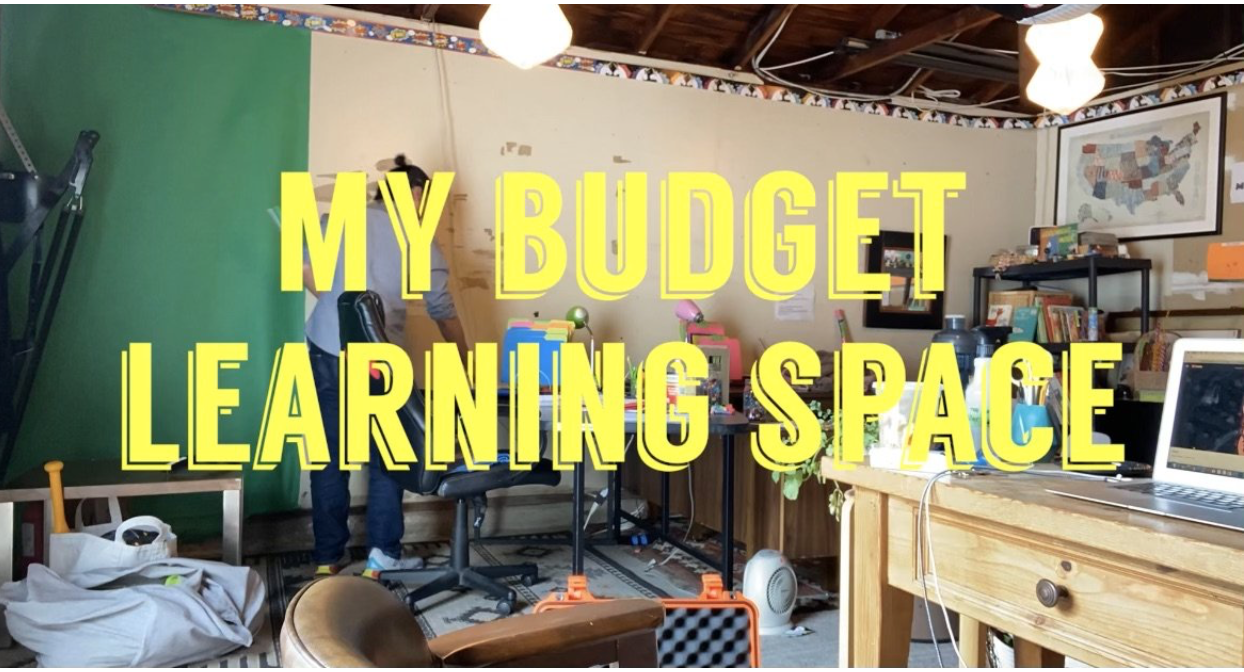
Creating Your Remote Learning Space
While the kitchen table is a flat surface and makes it easier to keep track, these types of common areas are the worst place for learning, as they are often busy and full of distractions. It’s important to define a space with your child that is dedicated to learning.
In this past year, parents have used every trick in the book to give their kids a space to stay focused while on Zooms with their teacher, but there has yet to be any formal guidance. If you are lucky your school will chip in for a nice set of headphones to go with the Chromebook and they will wish you luck!
Now while the kitchen table is a flat surface and makes it easier to keep track, these types of common areas are the worst place for learning, as they are often busy and full of distractions. It’s important to define a space with your child that is dedicated to learning.
At my school, we send home school supplies typically used by teachers and encourage parents to build a learning environment. While you can use their bedrooms, it is best that the space is not used for other activities, and far away from distractions.
Posters with learning targets, calendars, phonics cards, multiplication tables, are all simple ways to create the mental space for your student to focus. When something is on the wall a student may read it hundreds of times per day, as they take breaks from the screen.
If you want to place to start, I highly recommend googling the closest teacher store, (LakeShore Learning is my favorite) or look online for places teachers go to set up their rooms.

The Agenda
One of the most important parts of a good home learning environment is a daily agenda board (either magnetic or dry erase) that can be used to structure the day.
We discuss this in further detail in other posts, but dividing the day into smaller digestible chucks allows your child to manage their energy and focus. You will want to work with your teacher to better understand their plans, but be sure to add “brain breaks” and exercise times in between Zooms.
Its best if this agenda is a white board or can somehow be renewed each day. I recommend leaving an open slot on the agenda in the afternoon for your child to earn a choice activity.
One of the most powerful ways to use this agenda is as a place of reflection. You could give happy faces or points for those activities that went well and find a way to signal when you need a change in behavior in others.
The Calendar
The Calendar is something in every classroom that helps students better understand the passage of time and if used correctly can help them to chart their progress. For little ones, it is critical to use a calendar and discuss the day of the week, the month and any upcoming holidays. There are so many great conversations that come spontaneously out of a discussion on what day it is. For those of you Tiger Moms and Dads, you can do a quick google to find an important event in history on each date.
When it comes to charting progress, its simple. At the end of each day, maybe after reflecting on your agenda, you turn to the calendar and write a few words or a symbol you have agreed on to sum up the “highlight.” For example, you could write “Finished Charlotte’s Web” or “got my first fraction problem.” You will likely miss many days, but the ones you catch and write something will be magical by the end of the year. I promise!

The Learning Target Board
If you haven’t already, please check out our student friendly Printable Learning Targets for your grade level. These are taken from the Common Core Standards and provides a list of skills your child must master in each grade. Before the pandemic, the good teachers would set the goal for the day or week based on these standards and post it on the wall.
“By the end of the week I will be able to ….”
Every home is different, but if your learning environment allows for some extra color (maybe in a garage, closet or guest room), I would go all out and get bulletin board materials like fadeless butcher paper and borders. They are very cheap but can quickly transform the emotional experience of a space.
A dark garage becomes a classroom when you staple a large sheet of bright green paper with blue borders. Even better they sell these products in themes. Ask your child to pick out their favorites. I guarantee that if you hand the learning target on a wall that is covered with dolphins and sea creatures, you will have captivated their interest.
Now is the time you need to use your brain. You may want to ask the teacher which the learning target they will be covering in the next few weeks to stay on the same page. Look at the skill and try to model out how you would answer the question on a chart paper or series of pages that your child can refer back to. In a pinch, you can google the skill and you will find downloadable images that look like worksheets that you can use. I think its best, however, for you to put yourself out there and show them YOUR way of doing it.
Now as the class starts working on this skill, your child will be the first to raise their hand. While it may take them time to fully master it, you will have set their efforts squarely on this target. I encourage you to make a big deal and use stickers or colors to celebrate mastery of a learning target. You will find your student will ask more questions and be more motivated to listen in class.

Graph paper and Wide-Ruled Notebooks
The learning environment at home is completed with a few extra tools that are often over looked. In Remote Learning, a huge part of learning was disrupted by the keyboards and screens. No matter how good the teacher or learning software program, nothing can substitute for a piece of scratch paper.
Every brain on this planet has a slightly different way of learning and processing new information. We each have a different way of taking notes to answer a word problem or outlining an essay. The Parent Partnership has many different ways to maximize the use of a Graph Paper notebook to support learning in Math, and a lined notebook for reading and writing. (line width is based on age) These notebooks allow your child to show their thinking on paper, and I highly encourage you to read through it regularly to see if you can spot any confusion. If can message your teacher on what you see, this can greatly help the school be more efficient in serving your student in class. Even better, you can try to guide and review these skills yourself on the next page. The world is yours on a blank notebook!!
Tips for Distance Learning- You got this!
Over the summer of 2020, we started a weekly training course for parents. Parents learned about the need for structure and routines at home, and to create a dedicated learning environment for their student at home with school supplies.
We wanted to treat them like part of the faculty at the school, and give them the tools we give our new teachers. Here are some of the top tips we shared in these sessions:
As a principal of an elementary school during March of 2020, there were a lot of thoughts running through my head.
As we moved into April, and we realized that sending packets home and zooming a few hours was not enough. The kids were not engaged and not learning. This was going to take a shift in perspective.
Over the summer we started a weekly training course for parents. Parents learned about the need for structure and routines at home, and to create a dedicated learning environment for their student at home with school supplies.
We wanted to treat them like part of the faculty at the school, and give them the tools we give our new teachers. Here are some of the top tips we shared in these sessions:
It’s Not About Being Finished
The biggest misconception with education is that teachers want perfect work. As a parent, you never want to give answers or force your student to complete something they don’t understand.
Each assignment is an opportunity for a wonderful discussion to help you understand how your student thinks and where they need help. Rushing or punishing students for not getting things done can create negative feelings about school for both of you.
Take your time, ask a lot of questions and enjoy listening to your student work through problems and build mastery of the skills themselves. If you both are stuck on a problem, teachers love it if you send a message to let them know.

The Learning Key
Our website offers you a list of Learning Targets your child will be responsible for at his or her grade level. It is important you look this over and become comfortable with what is expected.
As the year progresses you will see the teacher using these same terms when they update you on report cards and assignments. Being able to listen to your student describe the weekly Learning Target and identify any confusion, will help you target your help and build their confidence in overcoming mistakes.
“I do”, “We do”, “You do”
If your student is having trouble on a Learning Target, it’s best to start with modeling how to do it correctly. First you should demonstrate the skill for the student slowly and accurately, while thinking aloud, the student will have a chance to imitate this success. (I do)
Next, you can try a problem together and ask your student questions to move you step by step through the problem. You may find that this may take several attempts to practice, but it is very important to listen carefully to your student. (We do)
Finally, once practiced, the student is ready to try some of the problems on their own. They may not get them all correct, but they will be confident enough to engage with the problem and try their best. (You do)
Must do and May do
Sometimes you may have siblings at different levels of success with school. In this case, it is important to create ways to make things fair, and not allow one student to become frustrated when the other finishes.
Developing a list of “Must do” tasks and “May do” tasks, can help keep all members of your family busy during learning time. For example, both of your students “must do” the assignments given to them by their teacher, but if one of them finishes early, they may do a cartoon book or science experiment.
We at the Parent Partnership believe that this conversation will outlast this pandemic. The old model of teacher in front of the class education was already fading away as the flipped classroom and blended learning approaches were becoming mainstream.

Higher Level Thinking at Home
In schools today, your child is spending much more time learning to think than learning any facts or information. To put this in perspective, a 4th grade student must be able to evaluate an author’s technique, describe a story’s underlying theme, and cite evidence to defend their opinion of a character’s decision. In more popular culture and media, these skills often get lumped together into the concept of “critical thinking” or “higher level thinking.”
In schools today, your child is spending much more time learning to think than learning any facts or information. To put this in perspective, a 4th grade student must be able to evaluate an author’s technique, describe a story’s underlying theme, and cite evidence to defend their opinion of a character’s decision. In more popular culture and media, these skills often get lumped together into the concept of “critical thinking” or “higher level thinking.”
What is higher level thinking?
Most educators agree that the framework developed by Benjamin Bloom in 1956, commonly referred to Bloom’s Taxonomy, is the clearest method to describe these levels to talk about thinking and learning: Remembering, Understanding, Applying, Analyzing, Evaluating, and Creating.
As you can see in the chart below, thinking builds towards breaking down complexity and examining relationships between abstract concepts. This sounds much more like college than it does elementary school to those of us who are adults. However, the Common Core standards have now focused on ensuring elementary and high schools are teaching and assessing student’s abilities at the top three levels. This has led to the crazy looking homework you might have noticed lately.

From my experience as a principal and teacher, these higher level thinking skills are hard to teach equitably. Often, they are well developed in a small portion of students who actively participate in the class discussions and ask lots of questions. However, with 30 students and the insecurities of peer approval, most of the class will sit quietly and lay low. Now add the awkwardness of a zoom classroom. These students will lose out on opportunities to work on these skills without good discussions somewhere in there lives.
It is important to remember that learning and understanding at higher levels comes from depth. Each time a child hears the story they pick up on a new aspect of a character, or another detail in a picture or setting.
The good news is there is plenty you can do at home with little or no preparation to fulfill this need.
Close Reading at Home
Education Departments have agreed that one of the best ways to address higher level thinking reading standards in the classroom is through a process called close reading. This is where the students may read a shorter passage or paragraph several times to better understand each detail and decision the author has made. The familiarity of the text allows students to spend their brains energy on the deeper meanings.
Now think of your child’s favorite movies or that favorite bed time book you have read so many times you have lost count. While you can’t remember where you left your keys, you can probably recite lines from these on command.
Whether a reward after homework or a story before bed, and these characters and plots have become a ritual part of your household. This moment in the day provides a parent with a tremendous opportunity to use close reading strategies and higher level thinking questions that will all but ensure they are on a path to master the grade level standards.
Your questions may start something like:
Do you feel like reading “Madeline or Corduroy?”
Do you want to watch “Moana or Frozen?”
After watching the opening credits or looking at the book’s cover, you may ask a few REMEMBER questions to warm up.
I forgot, what was the name of Moana’s pig?
Do you remember why did Madeline need to go to the hospital?
As you move toward UNDERSTAND questions, you can have them describe the main plot points. Trying to get them to use their own words to describe the events and character feelings.
Why did Elsa lock herself in her room as a child?
Why did Corduroy decide to leave the shelf?
Depending on their grade level’s Learning Targets, you may decide to approach APPLY questions more in science and math. However a question like:
After seeing how Corduroy felt when the girl fixed his button, what might you do next time your sister needs help?
As we move into ANALYSIS, it is important your child has mastered the previous levels. This is where you can pull out a character or scene for a deeper dive. You may stop and reread a page in the book or rewind the movie.
What do you think makes the girl decide to choose Corduroy in the store?
What does the green stone symbolize in Moana and what parts of the movie make you think this?
How was the movie different than the book? What parts were missing?
EVALUATION questions can be the most fun, but you have to keep everything tied back to evidence from the story or movie. You will often be surprised at these answers!
What is the happiest ending in a story you have ever read?
What makes Frozen the best written movie you have ever seen?
How did the author pull you into the story and characters?
Who is your favorite villain character and why? What makes a good villain character?
Lastly, using your nightly journal, you can ask CREATING questions. In this context the most fun is to have them write their own ending to a story with a different goal for the audience’s emotions.
https://youtu.be/ZN-I7SLGR3k
Once you begin to use these type of questions, you will find every conversation can get a little deeper. You can ask CREATING or APPLYING questions to solicit help in fixing a broken toy or rearranging their room. You will find your own brain feeling tingles... its good exercise!!
Look for more posts in the future targeting higher levels of thinking in science, math, and nonfiction.

Making Sense of the Common Core
In 2014, the Common Core Standards were introduced as a complete overhaul to the American system of education. Previously, the states’ education departments had complete control over these standards, and each varied in emphasis and pacing. There was a big push in the 1990s and 2000s for states to create their own bubble tests to demonstrate student achievement. However, the system showed its flaws, as the incentives to provide easier the tests to produce higher test scores led states and schools to water down curriculums.
For those who are not aware, every public school must follow a set of standards for what and when certain skills are taught to our children. This means for example, schools must ensure every first grader knows how to add and subtract, and every 7th grader can solve for x.
In 2014, the Common Core Standards were introduced as a complete overhaul to the American system of education. Previously, the states’ education departments had complete control over these standards, and each varied in emphasis and pacing. There was a big push in the 1990s and 2000s for states to create their own bubble tests to demonstrate student achievement. However, the system showed its flaws, as the incentives to provide easier the tests to produce higher test scores led states and schools to water down curriculums.
As countries in Europe and Asia outpaced our students in every category, the science and technology economic sectors started moving out of the country and outsourcing projects. In response, the US Congress issued the initiative that all states should adopt the same set of standards, and that these would be redesigned to prepare students to be problem solvers and critical thinkers in an age of rapid technological advancement.
Like most sweeping educational reforms, the execution of the Common Core has already stumbled. The task of implementation was bestowed by the National Governors Association who were lobbied heavily by private text book businesses.
Before long a whole new market was born, as these companies capitalized on these new standards to force schools to buy whole new curriculum sets. Teachers had to scramble to buy the next bottle of snake oil to get their students prepared for the Common Core.
With the Every Child Succeeds Act of 2015, the Federal Government attempted to withhold funding from No Child Left Behind if states were unable to adopt the new standards. However, some of the states have fought back and there are several states, like Texas and Alabama, who never ratified. The current position of our Federal Government is that they are guidelines and strongly encouraged. There has been a politicization of these standards that was unexpected.
