
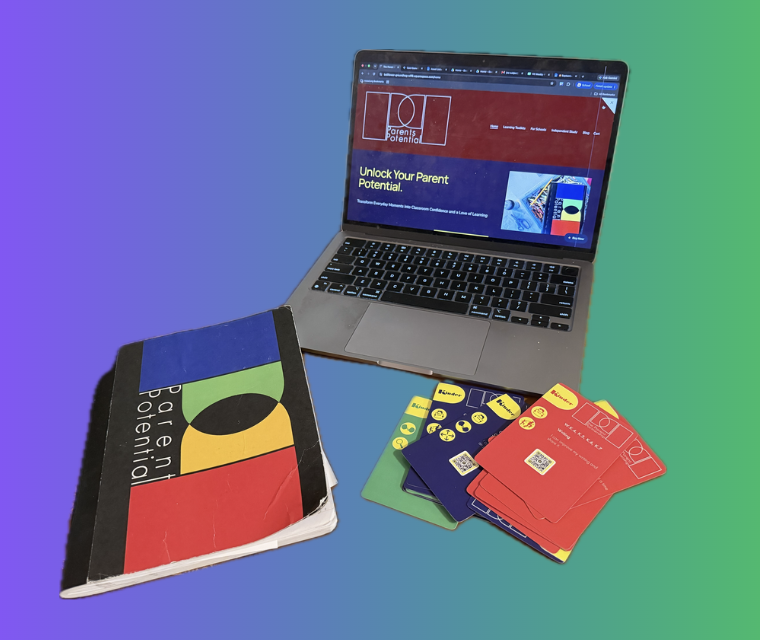
 Image 1 of 2
 Image 2 of 2
Our Digital Dashboard and Toolbox are built to give you exactly what you need to succeed with each card, right at your fingertips.

Here are a few sample cards to see how is easy this is. We have one from each habit, a sample project and an SEL activity.

Mixed Sampler
A custom sampler pulling one card or skill from each subject — Math, Language, Projects, and SEL — each keeping its own subject color.
 M1Math
Mental Math — Add and Subtract by 10s
I can add and subtract multiples of 10 mentally.
OA.1.1 · NBT.1.4 · NBT.1.6

Prompt 2 — Let's Add and Subtract by 10s
• Give them examples of adding and subtracting by tens and discuss the patterns they see.
Which numbers change and which stay the same?
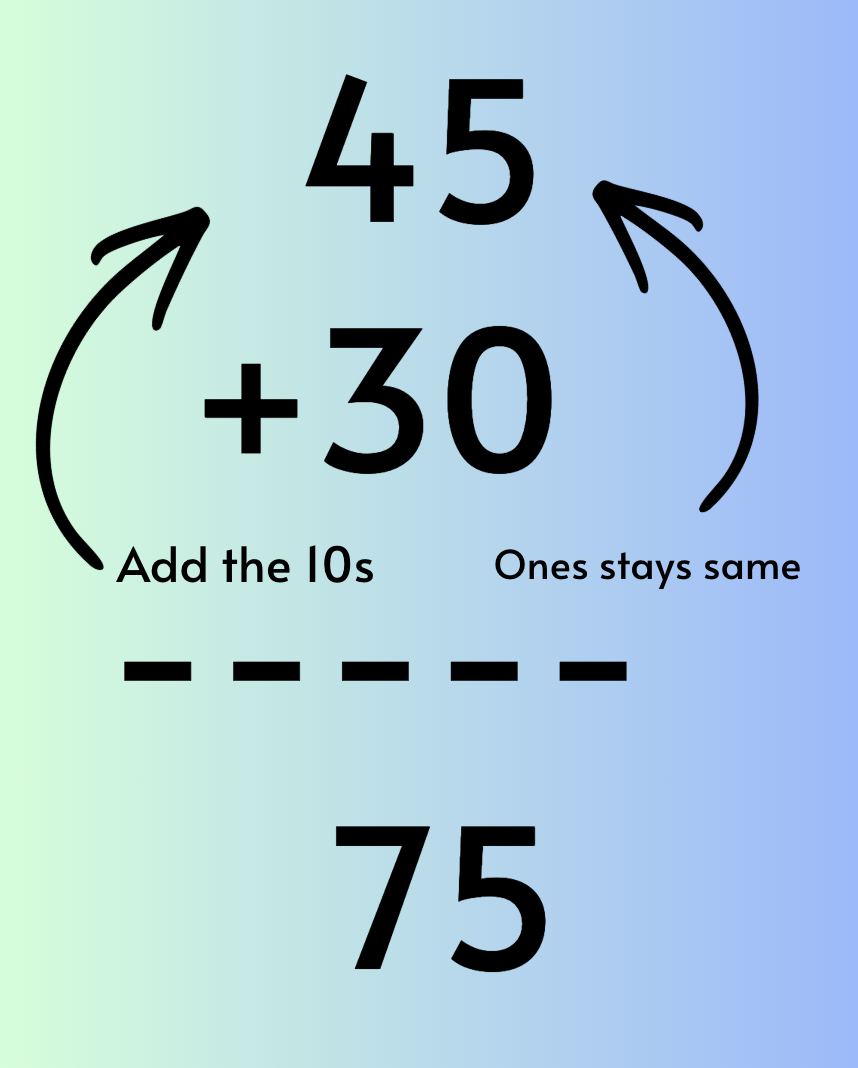
45 - 10 = 35
53 + 10 = 63
18 + 30 = 48
Play Tennis! Click for a tutorial.
 M4Math
Add and Subtract to 120 — Using an Array
I can add and subtract within 120 using an array model.
NBT.1.4 · OA.1.6
Skill 1 — Adding and Subtracting Using an Array


• After creating an array for a number like 26, write an addition equation like 26+8.

• Show how you can add 8 dots, completing one of the 10s and continuing to the next row to 34.
• Using a previous 10 frame number, model a subtraction equation like 34-6.
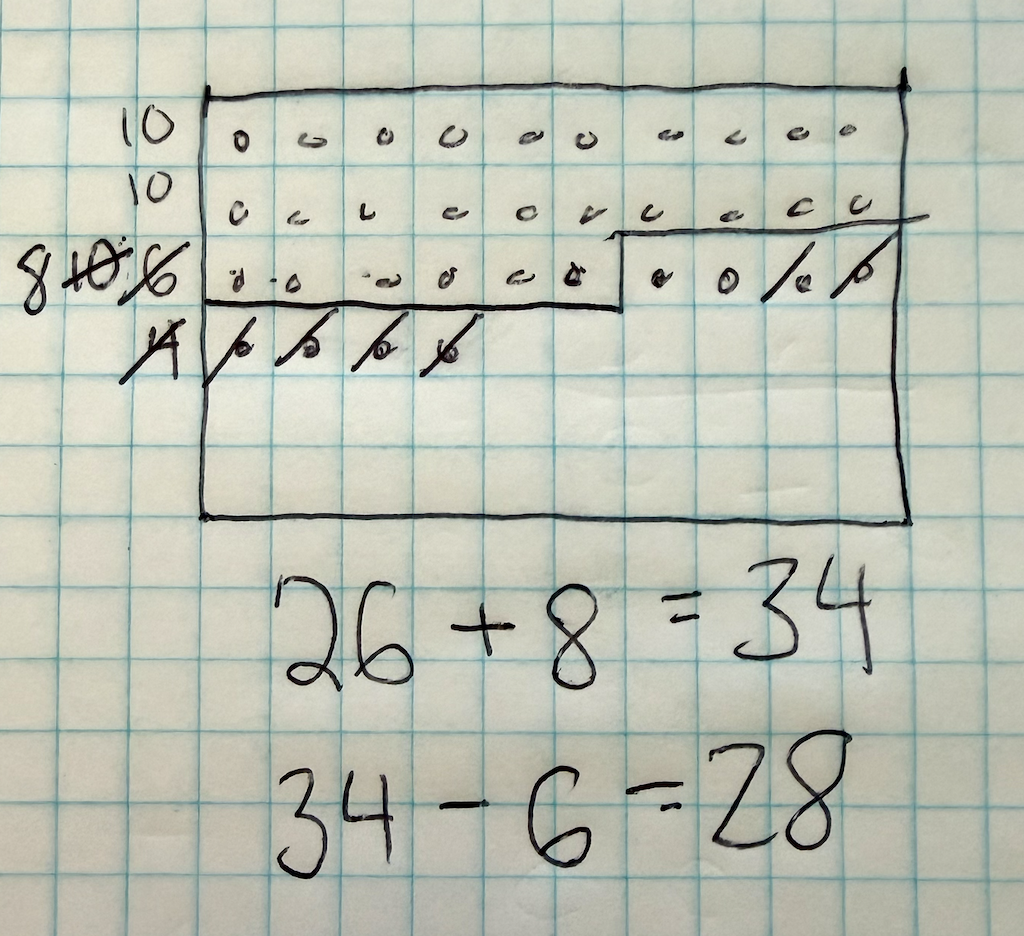
• Show how you can cross out 6 dots and move up to the previous row.
• Count the remaining dots to find 28.

 Math Generator
• Watch that they keep track of the amount of 10s and ones as they count backwards and forwards.
• This may take some time to master, so keep watching until they are finding the correct answer 3 times in a row.
 L1Language
Blending Sounds into Words — Blending & Segmenting CVC Words
I can blend and segment CVC words by sound.
RF.1.2a · RF.1.3a · W.1.1a

Skill 2 — Blending and Segmenting CVC Words
• Regularly spelled (Consonant/Vowel/Consonant) words are where to go once you have the letters:

• Use the example of BUS to model how to count out the three sounds you hear with your fingers
B, U, S.
• Then write the letters as you say B, U, S again.
• Have them try this on another word like:
BIG
What's the first sound you hear? What's the middle vowel sound? What's the last sound?
• Repeat this with more examples:
Cat Dog Red Bug Pit

• Once you see mastery, try being tricky and switching vowels to make new words
PIN, PEN, PAN
SIT, SET, SAT

 L10Language
Comprehension — Clarify
I can use strategies to clarify confusion while reading.
RL. 1.2, RL.1.3
Skill 2 — Clarify

• As they read, hold your finger to each word and observe your child for any sign of confusion or stumble in pronunciation.
• When a confusion arises, ask them to stop reading and use one of the following strategies:
Let's look for clues in other words in the sentence, any pictures
• Here is an example of this thinking you can use to model:
The bird flew up to feed the squirming aphids to her young.
Birds might eat insects or plants. Insects would squirm.
Aphids might be an insect?
Let's look for clues in the word, its root or any suffix, prefix.
• Use this example of breaking apart a word to see its meaning:
Careful = If I know the word care and the suffix "ful," then I can guess that careful is being full of care.
 Informational Text Generator
Use our Informational Text Generator to create a grade-level nonfiction passage on a topic they like.
 Book Quiz
P1Projects
How-To Guide
Write clear instructions explaining how to complete a task or routine.
W1.2 · L1.2b · L1.3
Card A — How to Write a How-To Guide
• Use the exemplar to discuss how instruction manuals are organized:
• They take a larger task and break it into smaller steps.
• They are short and clear sentences.
• There is often a combination of pictures, words and often keys
Learning to tie your shoes takes practice, but you can do it! Follow these simple steps:
Step 1: First hold one lace in each hand. Cross them to make an "X" shape.
Step 2: Take one lace and tuck it under the other. Pull both ends tight to make a knot.
Step 3: Make a loop with one lace that looks like a bunny ear. Hold it tight!
Step 4: Next, take the other lace and wrap it around your bunny ear.
Step 5: Push the lace through the little hole you made to make a second bunny ear.
Step 6: Last, grab both bunny ears and pull them tight!
You did it! Now your shoes are ready for a big day of playing.
• Find other examples of How-to Guides around the house,
Toy instruction manuals
Furniture assembly manuals
YouTube tutorials
• Guide them to choose a familiar task or chore of which they are an "Expert".
Making a snack
Brushing teeth
Building with LEGO
Feeding a pet
• They can think about the steps to complete this task for next time.
Card B — Drafting Instructions
• Use the exemplar on Card A to remind them of their goal.
• Point out how each step starts with a verb.
• Point out sequence words (first, next, last)
• Clear words to avoid confusion
• Thinking about the reader's experience at each step
• Use the notebook to allow them to begin drafting.
• Have them say step one out loud, and once you confirm, they can write "Step 1" and the sentence.
• Gradually allow your child to write the following steps independently.
• Remind them to:
• Say the sentence before writing it
• Capitalize the first letter
• Make good word choices
• Keep the steps in order
• Don't try to correct their spelling, it's good for them to practice as long as you can see that they are attempting to write all the sounds in the word.

Card C — Revising & Publishing
• First test the draft directions with another family member or friend.
• Ask for feedback from them:
Were the directions clear?
Did any steps cause confusion?
• Model how to take notes on this input and revise unclear wording and improve sentence clarity.
• When ready, set them up with paper and crayons to publish the final version with:
Illustrations
Labels
Numbered steps
• Co-creating a Google Slides/PowerPoint can be a fun way to help them sequence steps with images and directions
SEL 1SEL
Listening
I know how to Listen to learn from others.
Look at the image of the listener on the back of this card together.
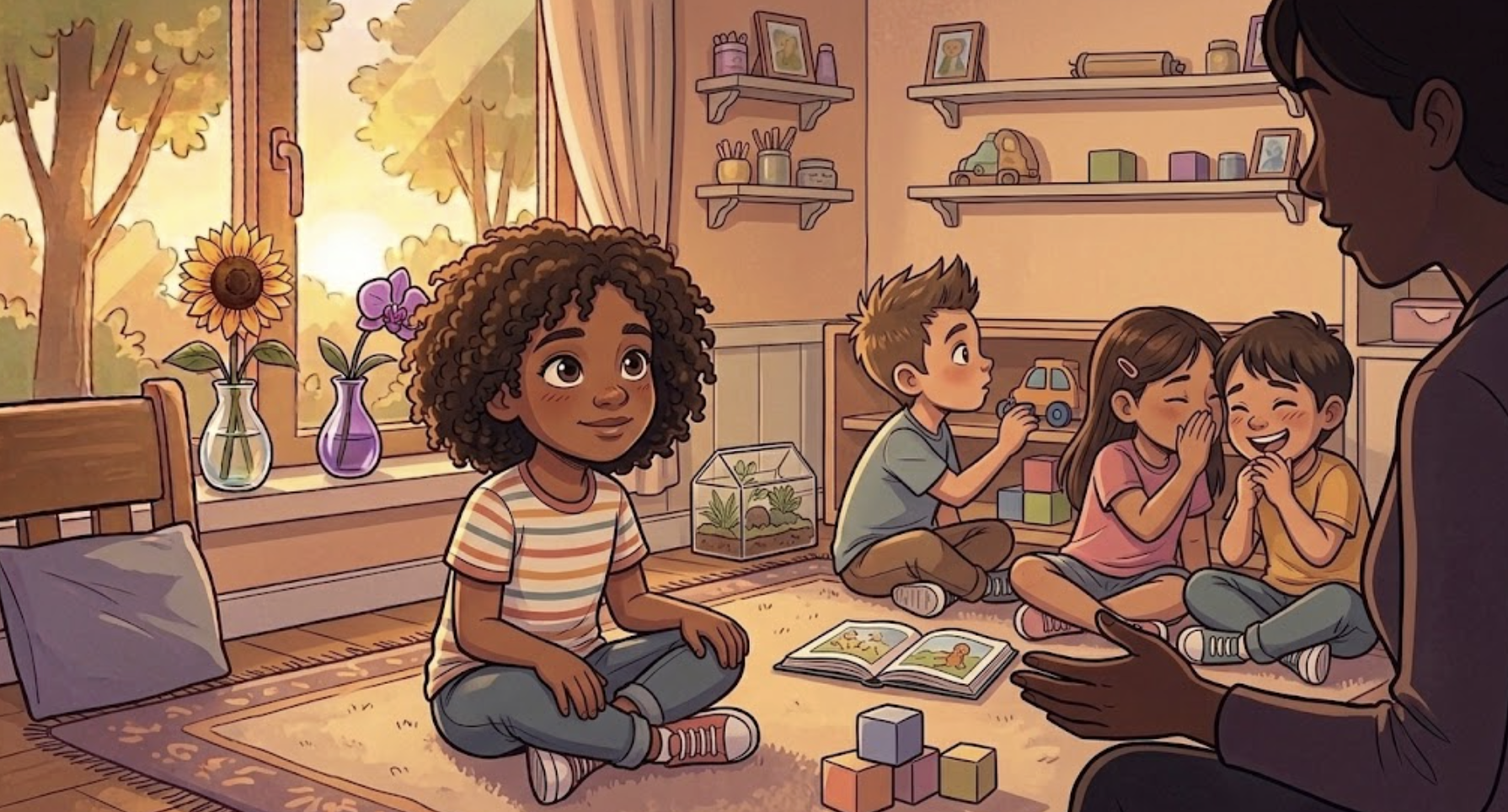
What do you notice about her eyes?
What do you notice about her hands?
What do you notice about her mouth?
How does this help your brain and ears do their job in understanding the speaker?
What can you do if you are having trouble listening?
Math Habits
- Prompt 1 — Let's Try to Solve This Without Any Paper!
- Prompt 2 — Let's Add and Subtract by 10s
- Skill 1 — Fact Families
- Skill 2 — Find the Missing Number
- Skill 3 — Commutative Property of Addition and "Making 10"
- Skill 1 — Ones, Tens, Hundreds
- Skill 2 — 10 Frame Arrays
- Skill 3 — Expanded Form and Comparison (<, >, =)
- Skill 1 — Adding and Subtracting Using an Array
- Skill 2 — Traditional Method H/T/O
- Skill 1 — Drawing and Naming Shapes
- Skill 2 — Using Combinations of Shapes to Draw Things in the Real World
- Skill 3 — Divide Geometric Shapes into Equal Parts
- Prompt — What Time Does This Say?
- Skill — Identifying the Task
Language Habits
- Skill 1 — Letters and Sounds
- Skill 2 — Blending and Segmenting CVC Words
- Skill 3 — Consonant Blends
- Skill 1 — Word Families
- Skill 2 — Vowel Teams
- Skill 3 — Silent E
- Prompt 1 — Clap for Each Beat You Hear In…
- Prompt 2 — Open and Closed Syllables
- Skill 1 — Mix Them In
- Skill 1 — Simple Sentence Punctuation
- Skill 2 — Rules for Capital Letters
- Skill 3 — Introducing the Comma
- Skill 1 — Verb Tense
- Skill 2 — Conjugation
- Skill 1 — Plurals
- Skill 2 — Possessives
- Skill 3 — Pronouns
- Skill 1 — Pointing to the Words
- Skill 2 — Words Per Minute
- Skill 1 — Questions that Find the Answer
- Skill 2 — Questions that Develop an Opinion (CarTalk)
- Skill 1 — Summarize
- Skill 2 — Clarify
- Skill 3 — Predict
- Skill 4 — Cause and Effect
- Skill 1 — Focus on the Author
- Skill 2 — Compare All the Reasons to Write
- Skill 3 — The Narrator
- Skill 1 — Shades of Meaning
- Skill 2 — "Movie in My Mind" Words
- Skill 3 — Root Words
Projects
- Card A — How to Write a How-To Guide
- Card B — Drafting Instructions
- Card C — Revising & Publishing
- Card A — Brainstorming Ideas
- Card B — Sequencing
- Card C — Drafting
- Card D — Revising & Publishing
- Card A — Estimating Quantities
- Card B — Counting & Tally Marks
- Card C — Creating Bar Graphs
- Card A — Brainstorming Stories & Main Ideas
- Card B — Character Comparison
- Card C — Drafting an Opinion
- Card A — Gathering Sources
- Card B — Asking and Answering Key Questions
- Card C — The Final Report